Tag: Agra Tourism

  • Lesser-Known Historical Monuments Beyond the Taj Mahal

    Introduction

    When people think of Agra, the Taj Mahal is usually the first image that comes to mind. However, the city and its surroundings are home to many other lesser-known historical monuments beyond the Taj Mahal that showcase Mughal architecture, rich history, and cultural heritage.

    These hidden gems are often less crowded, making them perfect for travelers who want to explore Agra at a deeper level. From ancient forts and abandoned cities to beautifully designed tombs and gardens, these monuments offer a fascinating glimpse into India’s past beyond its most famous landmark.


    Why Explore Hidden Monuments in Agra?

    While the Taj Mahal is a wonder of the world, Agra’s lesser-known sites provide a more complete historical experience.

    Key reasons to explore them:

    • Avoid large tourist crowds
    • Discover authentic Mughal architecture
    • Learn untold historical stories
    • Enjoy peaceful exploration
    • Capture unique photography spots
    • Experience heritage beyond mainstream tourism

    Lesser-Known Historical Monuments Beyond the Taj Mahal in Agra

    https://images.openai.com/static-rsc-4/BYFfaqme5qxuvM6mdN7lxaPL9ipjt5zGO6Px1CPLC1IZzh813y1wJc0-IsaLKWXAPQbTLePt9rnbVUzggQGUrnOnutlUf_7Sx4_A-xrG-Apk7WNaJb0bAeRyVi3Fp1-WsgqEYv0XRZNFsev4cQLgUuYp4Nyl8UKBLK9KlymayCcu1Z_IENIBeeNjCu6RDx7r?purpose=fullsize
    https://images.openai.com/static-rsc-4/-64BteeFgcBQI2jDiQXXeUFuFRzJx8__F6iygUseEz4c_NzwFqU6DlR5JSFl-qWn7-o2KP_gwOxcX6T18MG_tu9WGuB58tlcY26x4FXUIsUF0IDqnbEb4YOqp0WxWc1kizvYpLxGVgObS0qzPOQrm5KrydXhlH7AmSGYHHdVmmHEThrYozWS0m_lEZUKfVrH?purpose=fullsize

    1. Itmad-ud-Daulah’s Tomb (Baby Taj)

    Often called the “Baby Taj,” this beautiful marble mausoleum is considered a draft of the Taj Mahal’s design.

    Highlights

    • Intricate marble inlay work
    • Persian-inspired architecture
    • Peaceful riverside location
    • Mughal garden layout

    This monument is smaller but equally detailed and artistically rich.


    2. Mehtab Bagh

    Located across the Yamuna River, Mehtab Bagh offers one of the most stunning sunset views of the Taj Mahal.

    Highlights

    • Perfect photography viewpoint
    • Mughal garden design
    • Peaceful atmosphere
    • Ideal sunset spot

    It is believed that Shah Jahan once planned to build a black marble Taj Mahal here.


    3. Tomb of Akbar (Sikandra)

    This grand mausoleum of Emperor Akbar reflects a blend of Hindu, Islamic, Buddhist, and Christian architectural styles.

    Highlights

    • Massive gateway entrance
    • Beautiful red sandstone structure
    • Deer and peacocks in surroundings
    • Calm garden setting

    The monument reflects Akbar’s philosophy of religious harmony.


    4. Fatehpur Sikri

    A UNESCO World Heritage Site, Fatehpur Sikri was once the capital of the Mughal Empire before being abandoned due to water scarcity.

    Highlights

    • Buland Darwaza (largest gateway in the world)
    • Jama Masjid mosque
    • Panch Mahal palace
    • Royal courtyards and halls

    It is one of the most well-preserved ghost cities in India.


    5. Mariam’s Tomb

    A lesser-visited Mughal monument dedicated to Mariam-uz-Zamani, wife of Emperor Akbar.

    Highlights

    • Elegant Mughal design
    • Peaceful surroundings
    • Historical significance
    • Less crowded site

    6. Chini Ka Rauza

    This unique tomb is known for its glazed tile work influenced by Persian architecture.

    Highlights

    • Blue glazed tiles
    • Riverside location
    • Artistic Mughal craftsmanship
    • Quiet atmosphere

    7. Ram Bagh (Mughal Garden)

    One of the oldest Mughal gardens in India, believed to be designed by Emperor Babur.

    Highlights

    • Charbagh layout
    • Historical significance
    • Yamuna river view
    • Peaceful environment

    Comparison of Hidden Monuments in Agra

    MonumentHighlightBest For
    Itmad-ud-DaulahMarble inlay artArchitecture lovers
    Mehtab BaghTaj sunset viewPhotography
    Akbar’s TombRoyal legacyHistory enthusiasts
    Fatehpur SikriGhost cityExploration
    Chini Ka RauzaBlue tile artArt lovers

    Best Time to Visit These Monuments

    The ideal time is between October and March, when the weather is cool and pleasant.

    Early mornings and late afternoons are best for photography and peaceful exploration.


    Travel Tips

    • Hire a local guide for historical insights
    • Carry water and sunscreen
    • Visit early to avoid crowds
    • Combine nearby monuments in one trip
    • Wear comfortable walking shoes

    Why These Monuments Matter

    These lesser-known historical monuments beyond the Taj Mahal reveal the depth of Mughal history and architecture. They help travelers understand that Agra is not just about one monument but a rich collection of cultural heritage sites.

    Each structure tells a unique story—of emperors, artistry, and ancient city planning.


    Conclusion

    While the Taj Mahal remains the crown jewel of Agra, exploring the lesser-known historical monuments beyond the Taj Mahal offers a more complete and meaningful travel experience. From the artistic beauty of Itmad-ud-Daulah to the historic grandeur of Fatehpur Sikri, these hidden gems enrich your understanding of India’s glorious past.

    If you are planning a Golden Triangle tour, make sure to go beyond the Taj Mahal and discover these incredible heritage sites.

  • Museums Worth Visiting in Delhi, Agra & Jaipur

    Introduction

    The Golden Triangle of India—covering Delhi, Agra, and Jaipur—is not only famous for its monuments and heritage sites but also for its rich collection of museums. Exploring the museums worth visiting in Delhi, Agra & Jaipur gives travelers a deeper understanding of India’s history, art, culture, and royal legacy.

    From ancient artifacts and Mughal treasures to royal costumes and modern art collections, these museums offer an insightful journey into India’s diverse heritage. Whether you are a history lover, art enthusiast, or curious traveler, these museums are a must-add to your itinerary.


    Why Visit Museums in the Golden Triangle?

    Visiting museums helps you connect with India’s past in a meaningful way beyond monuments.

    Key reasons to explore museums include:

    • Learn about India’s ancient civilizations
    • Discover Mughal and Rajput history
    • Explore royal artifacts and weapons
    • Understand traditional art forms
    • Experience cultural storytelling
    • Enjoy educational and family-friendly visits

    Museums add depth and context to your Golden Triangle journey.


    Museums Worth Visiting in Delhi

    https://images.openai.com/static-rsc-4/2-BVPa-YtXWdHEOpKasLUz9MbkWuxx5jep3cgdVq2hiXajHzK-NriTwuGlYB8WQbfJYGd2O56byruLAmpserJwc-poP7Ihlk0NMaa8swz3ctF4NnqWIeiB9Q5xTM-7-Ph3lb5CxpPtMStXz-VPEVRSfSmnPjPzPLvfxrQ87KuZQkRDyPK5k46GGTcCxHCdyE?purpose=fullsize
    https://images.openai.com/static-rsc-4/y8WhEJeY4h6fOwpKGBRpAoZXCCPdCeuv5bDkrMn8cuG024wL1n8nZfeFR39N4vQVrrYdMg8K1b5t8iTw3FlsywqUTEXFyKqN5irbOyBzthJ60bZBIUtY0XJyuH7qqbK_MstV5y5RycoUwCHgxY9AEl2_neHFPaBb4e1Vpedp0nmyKF_Fm8Z-JI435KoxTEta?purpose=fullsize
    https://images.openai.com/static-rsc-4/19qh5XLUOFJ0qi3O0cXi9gpSEr7VT-Mf6chVKmCsYvTE-7xz0RKBEB6Vm_VHViCZGDyb3byWqA1g-YR4E69BeR94MhfsS4rBO55k7C4c2hrgILDJzgDQsUZCVVz46SbZqyDyskkjshSOcnUqeyhzq_4qjzytaDPh71FGXqKGjNezPnyS2F7YtemuKu6-UOP3?purpose=fullsize

    1. National Museum, Delhi

    The National Museum is one of India’s largest museums, showcasing artifacts from prehistoric times to modern history.

    Highlights

    • Harappan civilization artifacts
    • Ancient sculptures and paintings
    • Coins, weapons, and manuscripts
    • Buddhist relics

    Best For: History lovers and researchers


    2. National Gallery of Modern Art (NGMA)

    This museum showcases India’s modern art movement with works from famous artists.

    Highlights

    • Paintings by Indian masters
    • Contemporary art exhibitions
    • Photography collections
    • Rotating exhibitions

    3. Rail Museum

    A unique museum showcasing India’s railway history with real locomotives and interactive displays.

    Highlights

    • Vintage trains and coaches
    • Toy train rides
    • Railway memorabilia
    • Outdoor exhibits

    4. Indira Gandhi Memorial Museum

    This museum is dedicated to India’s former Prime Minister Indira Gandhi and her life.

    Highlights

    • Personal belongings
    • Historical photographs
    • Memorial site
    • Political history exhibits

    Museums Worth Visiting in Agra

    https://images.openai.com/static-rsc-4/PhOvQZrFG7bbhSOaQG-4H6IcXMRmlTjvjHsjXbz4PUGE-0Jxib6fmI3xv6c99CXNEgk_9TwXUZgazH2R8hUdSBHeGWSsNplm3cO6qfZaW07UdsCuuf6JnXK59TM7acQZkgcZa8rzHUBkYAAUdFL3JgthBCG1snky9vQ_EWzjbOEEvJUyHZwoutNX8XiQ1NqZ?purpose=fullsize
    https://images.openai.com/static-rsc-4/JgGSyi646YHlwPn9UyrdzzJ6Ias5lvVjcFjaRqq7rOQPuScgVzRNPZOwRL17g5hoigy8mo2fV36yAdfBafbqD0krvMe2NWMFJMMkoLXw747H5e3k_xDJhCWmSKIWN0UkqQSIrERQhBFOP6BfHeGy5738ObHBZBmAdOwJwUis6znVZHs_CvxVXJ9fyohxGox0?purpose=fullsize
    https://images.openai.com/static-rsc-4/aZS8hdSa-CX692-WCa3GXw9NLzKwTu6ac6ICHfGwH97VkOHXPaA1GRDuGWv3xwKhSS3WneO0v76scz2HhnSVoxkHLmr0Jq8I1pAnMywIe1SdwMLFVV5_-cHyWnqMUCz-7mvS-nCBXrbQZRP_NxoBspa9XUlg3T-p0ziIwCIKf-ncHncRVZ1YNquk-jVDnJvd?purpose=fullsize

    1. Taj Museum (Agra Fort)

    Located inside Agra Fort, this museum displays Mughal-era artifacts linked to the Taj Mahal.

    Highlights

    • Mughal paintings
    • Royal manuscripts
    • Weapons and armor
    • Architectural models

    2. Archaeological Museum, Agra

    This museum preserves relics from ancient and medieval periods of Agra’s history.

    Highlights

    • Sculptures from Gupta era
    • Coins and inscriptions
    • Stone carvings
    • Historical artifacts

    3. Khas Mahal Display Area

    Inside Agra Fort, this section showcases royal Mughal lifestyle artifacts.

    Highlights

    • Royal Mughal lifestyle exhibits
    • Architectural models
    • Historical artifacts

    Museums Worth Visiting in Jaipur

    https://images.openai.com/static-rsc-4/4IQ_BmdCmzLmxocgG5v0iThryvRAE_1igEi9FDzWotNS8XK7lLEIqi-H-nfcUU7G1vDSTm3sS874jKCAGwVf7JEx4BgPtQp-QQMViC1aXV8BjPK0P7B4IUHk-V7K2ptxEAWtTBZEsKPLUn0FUDWVzj1sqXxIBAbw1FbAbiw_fYf-B43mjlt9Z1LgElauJ3x7?purpose=fullsize
    https://images.openai.com/static-rsc-4/3e8SUC1_dkHwIZmj5ykZqQeEUR4mQLIEYkvmDo_NAKflOf9SOsxL4QiPc1AfZ7Gx1FUnhmClDHFjxPE1iLDZ5rUjepK2Yv8N70ApikhTCiwUU8ysy6RQclnoSRn8FxXXw-xO19hJkHCkVP7EbCuEXJfEPkx84CQ3YTMBLi2vdnxDBH4pCUIRS9AYMqXVSYI7?purpose=fullsize
    https://images.openai.com/static-rsc-4/Tt2DOE8EeKaytTWoKfJKREBomGRNH6NvtFlNqRjewabGrBMICq4NlhGMov9jNQ-WZZiHpCf0hsdJLPaq5H0AwNwSKYXpoKkoIuAtTNsy2bfrOpui070uyCSmiN6zY4K0bvJSOdK9oO1IX5nCOVPi8FAYzQhd_tjKe-DqGMKDJoQdmUFVYzFvPiL5l9qrsUYM?purpose=fullsize

    1. Albert Hall Museum

    The Albert Hall Museum is the oldest museum in Rajasthan and a stunning example of Indo-Saracenic architecture.

    Highlights

    • Egyptian mummy
    • Royal weaponry
    • Miniature paintings
    • Jewelry collection
    • Blue pottery artifacts

    2. City Palace Museum

    Located inside the City Palace complex, this museum showcases the royal heritage of Jaipur’s kings.

    Highlights

    • Royal costumes
    • Ancient weapons
    • Manuscripts
    • Art collections

    3. Jawahar Kala Kendra

    A modern art and cultural center designed by architect Charles Correa.

    Highlights

    • Contemporary art exhibitions
    • Cultural programs
    • Art workshops

    4. Jaipur Wax Museum

    A modern attraction featuring lifelike wax statues of famous personalities.

    Highlights

    • Wax figures of celebrities
    • Royal-themed setups
    • Photo zones

    Comparison of Museums in Golden Triangle

    CityMuseum TypeHighlights
    DelhiNational & ModernHistory, art, railways
    AgraMughal & ArchaeologyTaj history, artifacts
    JaipurRoyal & Art MuseumsKings, costumes, culture

    Each city offers a different perspective of India’s rich heritage.


    Best Time to Visit Museums

    The best time to visit museums in the Golden Triangle is between October and March, when the weather is pleasant.

    Morning hours are ideal for fewer crowds and better exploration.


    Tips for Visiting Museums

    • Allocate at least 2–3 hours per museum
    • Carry water and light snacks
    • Follow photography rules
    • Use guided tours for better understanding
    • Visit early to avoid rush

    Conclusion

    Exploring the museums worth visiting in Delhi, Agra & Jaipur is an enriching experience that brings India’s history, art, and culture to life. From the National Museum in Delhi to the Taj Museum in Agra and Albert Hall Museum in Jaipur, each destination offers unique insights into the country’s glorious past.

    Including these museums in your Golden Triangle itinerary ensures a balanced journey filled with knowledge, heritage, and unforgettable memories.

  • Famous Street Foods You Must Try During the Golden Triangle Tour

    Introduction

    One of the best ways to experience India is through its vibrant street food culture. Besides exploring iconic landmarks, tasting the famous street foods during the Golden Triangle Tour is an unforgettable part of the journey. The Golden Triangle, which covers Delhi, Agra, and Jaipur, offers a wide variety of delicious snacks, sweets, and local specialties that reflect the rich culinary traditions of North India.

    From spicy chaats in Delhi to the famous Petha in Agra and crispy Pyaaz Kachori in Jaipur, every city has something unique to satisfy your taste buds. This guide highlights the must-try street foods that every traveler should enjoy while exploring the Golden Triangle.


    Why Explore Street Food During the Golden Triangle Tour?

    Street food is more than just a quick meal. It introduces visitors to authentic flavors, local traditions, and everyday life in India’s busiest cities.

    Here are a few reasons to try local street food:

    • Taste authentic regional recipes
    • Experience local culture through food
    • Enjoy affordable and delicious meals
    • Discover traditional sweets and snacks
    • Visit famous food streets and markets
    • Create memorable travel experiences

    Sampling local cuisine is one of the easiest ways to connect with the culture of each destination.


    Famous Street Foods in Delhi

    https://images.openai.com/static-rsc-4/9EOxkdmTHgrl_vZfS1JFtL8VR52Q5t6cWqfXH61Aq7hfIPfhq1owI8kIoXwfWbkZRAEQiO_fSec3bnElwcWCIlPg8ZtLvbfw9Bs0QbCWbTk7TWGh4iB46V0j1NbUNagiqd8-d3k30SPJ7CnTrz5M070CWwwpmXnyxXGiaLPQlIKolqQNsI54snJpR5Vs8ZO-?purpose=fullsize
    https://images.openai.com/static-rsc-4/H5MntTVOT927TWqcx8nkoQrIItmXEqi6CmuowsWlmwVr9VJ86m4QMbIGzNOtxFYX5Vd2unZgjGNRaq4HMDZZecdtsYOlSoVn0eyi3RBml8idmQ6Q5HQhIN6Ql__m-EIm18WsTCDEV7HT52ndpzd8vt5-f4J_kmmdOOeG95sMy6Yid78TA1izjH0hqCXdc_6t?purpose=fullsize
    https://images.openai.com/static-rsc-4/6IFNIfdYp8DsV_tR7ypbUVpUL73dQOalxbabNGu2HvjQYlXTsK4b_6v5uwM4-dUD4MBc00eQGiyikTrmkt8Dv-f5Ii3nCXEnk1IdJ-mA7YLeKnFvZZmr2XrxvMLbLvAyzkxrHnuGZ8_GnBAAfjGukCve9ZLS78RBVfrNCnSw5mfD3GFEPkg5mg-Hg_15UQmV?purpose=fullsize

    1. Chole Bhature

    Chole Bhature is one of Delhi’s signature dishes. It consists of fluffy fried bread served with spicy chickpea curry, onions, and pickles.

    Best Places to Try

    • Chandni Chowk
    • Karol Bagh
    • Paharganj

    2. Parathas at Paranthe Wali Gali

    This historic lane is famous for stuffed parathas prepared with various fillings such as potato, paneer, cauliflower, and mixed vegetables.

    Popular Fillings

    • Potato
    • Paneer
    • Mixed vegetables
    • Cheese

    3. Aloo Tikki and Chaat

    Delhi’s street food scene is incomplete without crispy Aloo Tikki topped with yogurt, chutneys, and spices.

    Why Try It?

    • Crispy texture
    • Tangy flavors
    • Fresh ingredients

    4. Jalebi

    Freshly prepared Jalebi is a favorite dessert among locals and tourists alike. It is crispy on the outside and soaked in sugar syrup.


    Famous Street Foods in Agra

    https://images.openai.com/static-rsc-4/hdB80VUfajnSHfSM3Co6N9hk8yjwTFEllT6I9jn6FxC5DRvQYavx-TwbdJV68w9LQkE754W3--ksUcvBtACVVYJ0IWnhDIh8GOdIx3OPBiF3rGHybrLh9GOswYlw3JxDy70VJCAzLvpcpSVJw-PFPgcr9naKhODwfMknGkoc4IumdQjAIw5qWsEQV_05CUS4?purpose=fullsize
    https://images.openai.com/static-rsc-4/4a1S0Bub-0V8aBIXdxnfYx2Yhxf5gagnRNotx8UBz-tcpSt02LEMm2ZbQFSByJqMBT95Md9zcn0dfEy3zt7d5x7ePdfDCyIhK7EgQ7ca9MmvgiiFDif_W7CbzJ-kaRQXdSRnL9y3flhzmGEfZWAl0xgEvwIMsBzLMbls_MFa0SXOwCPgr9txvIXs0s8vAIty?purpose=fullsize
    https://images.openai.com/static-rsc-4/7SkOKD-rlkG7ggycjRCxTBjWOVSditKaO6v0kOBgV6URd7nfsrpcUEg17DoeRj_xzyX9-U4vzRhr_ixqjcFrJYtPvkqXymdnoNFjNzCZS2Ejh1wLWL-SsZnzR5rT9919dfhQDni4gL0wPQlFbOOd-phx_Akmdlc9FFNxzDBU3hDzAwnslPEajOaPwzsiMCyx?purpose=fullsize

    1. Agra Petha

    Petha is Agra’s most famous sweet. Made from ash gourd, it is available in many flavors including saffron, paan, chocolate, and mango.

    Popular Varieties

    • Plain Petha
    • Kesar Petha
    • Angoori Petha
    • Paan Petha

    2. Bedai and Aloo Sabzi

    A traditional breakfast dish, Bedai is a crispy fried bread served with spicy potato curry.

    Best Time to Eat

    Morning hours.


    3. Dalmoth

    Dalmoth is a crunchy savory snack made with lentils, spices, and nuts. It also makes an excellent souvenir.


    4. Rabri

    This rich milk dessert is prepared by slowly reducing milk until it becomes creamy and flavorful.


    Famous Street Foods in Jaipur

    https://images.openai.com/static-rsc-4/8HlvqvDbWYlK0rxMrp5rDhZz8lPQUm2nV8NUJM3yf2cJlOjQvgNNQn-etKedwAjGld-COyHNLxFCOUryzmu4q53A40blJVS-gfTEj_bs8GciEqkugEeZj_i5qq1TEodJYLx9eNPbgi54u3WLoJrwmdhfBrSk4CXEaFZC7g5aU5AZDwO00oV4fAT6-OB7af6c?purpose=fullsize
    https://images.openai.com/static-rsc-4/J9ch4tuubHHzJ7B6XJdk3J0WvR62Q3-z9WliYjr_BHm2Cbk84fBrI67gtEK_vgRAGPrY0bLuBsxjvPxNRLbFlnAjK7R91c8w4fj9QJHcydaZBZtwnSELNB1kSXCEzHNC86D4L0DWuYmwFyyt6RZ6UkkTKwnwnyS5380vxnPY8XHKfz-djixQlE8pE4LtSI64?purpose=fullsize
    https://images.openai.com/static-rsc-4/Ygug4A0tqly5ymhjyqsaMAn0Gx0-85GN4fuYy5N6o0fcujJdarv4Zkujbp9fByWn4jb2TK0twTnTHdsUNyKZ9ebVPmXe1XfidNnAelMFTeHZT7tFp40gKY-vWeCak40HlWJAvriasG6whHAvAlccu5ZzkYu7n9qbHKzTBQKxckyxxoLQwb3MFiJkRvSy3YNZ?purpose=fullsize

    1. Pyaaz Kachori

    Pyaaz Kachori is Jaipur’s most famous snack. It is filled with spicy onion stuffing and served with chutney.

    Why Tourists Love It

    • Crispy outer layer
    • Flavorful filling
    • Perfect tea-time snack

    2. Ghewar

    Ghewar is a traditional Rajasthani dessert commonly enjoyed during festivals but available throughout the year.


    3. Mirchi Vada

    Large green chilies stuffed with spicy potato filling are coated in gram flour and deep-fried until crispy.


    4. Lassi

    Jaipur’s thick and creamy Lassi is served in traditional earthen cups and is perfect for cooling down after sightseeing.


    Best Food Markets to Explore

    If you enjoy trying multiple dishes in one place, visit these popular food markets:

    Delhi

    • Chandni Chowk
    • Connaught Place
    • Karol Bagh

    Agra

    • Sadar Bazaar
    • Raja Ki Mandi
    • Kinari Bazaar

    Jaipur

    • Bapu Bazaar
    • MI Road
    • Johari Bazaar

    These markets combine shopping and food, making them ideal stops during your tour.


    Tips for Enjoying Street Food Safely

    Street food is delicious, but following a few precautions will make your experience even better.

    • Choose stalls with high customer traffic.
    • Eat freshly prepared food.
    • Drink bottled water.
    • Carry hand sanitizer.
    • Avoid uncooked items if you have a sensitive stomach.
    • Try small portions of different dishes.

    These simple tips help you enjoy local flavors safely.


    Best Time to Enjoy Street Food

    Evenings are the best time to explore food markets because the atmosphere becomes lively, and most vendors prepare fresh batches of their specialties.

    The cooler months from October to March are ideal for food tours, as the pleasant weather makes walking through busy markets more enjoyable.


    Why Street Food Is an Important Part of the Golden Triangle Experience

    Every city on the Golden Triangle offers its own signature flavors. Delhi is famous for spicy chaats and stuffed parathas, Agra is known for sweet Petha and savory Dalmoth, while Jaipur delights visitors with Pyaaz Kachori and Ghewar.

    Trying these local specialties allows travelers to experience the diversity of Indian cuisine while creating unforgettable memories.


    Conclusion

    Tasting the famous street foods during the Golden Triangle Tour is just as rewarding as visiting its iconic monuments. From Delhi’s flavorful Chole Bhature and crispy Aloo Tikki to Agra’s famous Petha and Jaipur’s delicious Pyaaz Kachori, every destination offers unique culinary delights. Whether you are a food enthusiast or a first-time visitor, exploring the local street food scene will make your Golden Triangle journey even more enjoyable and memorable.

  • Hidden Gems You Shouldn’t Miss on a Golden Triangle Tour

    The Hidden Gems Golden Triangle route offers much more than the famous landmarks of Delhi, Agra, and Jaipur. While most travelers visit the Taj Mahal, Amber Fort, and India Gate, there are many lesser-known attractions that showcase India’s authentic culture, history, and architectural beauty. These hidden gems are perfect for travelers who want to escape the crowds and experience the Golden Triangle from a different perspective.

    From ancient stepwells and peaceful gardens to historic tombs and colorful local markets, these offbeat destinations add depth to your journey. If you’re planning a Golden Triangle tour, don’t miss these remarkable places.


    Why Explore Hidden Gems?

    Adding lesser-known attractions to your itinerary offers several benefits.

    You can:

    • Avoid crowded tourist spots.
    • Discover authentic local culture.
    • Capture unique photographs.
    • Learn more about India’s history.
    • Enjoy a relaxed sightseeing experience.

    These hidden gems complement the famous attractions and make your trip more memorable.


    Hidden Gems in Delhi

    1. Agrasen ki Baoli

    Located near Connaught Place, Agrasen ki Baoli is an ancient stepwell featuring impressive stone architecture and peaceful surroundings.

    Why Visit?

    • Historic architecture
    • Great photography location
    • Less crowded
    • Free entry

    2. Sunder Nursery

    Sunder Nursery is a beautifully restored heritage park filled with Mughal-era monuments, gardens, and walking trails.

    Highlights:

    • Landscaped gardens
    • Heritage monuments
    • Bird watching
    • Peaceful atmosphere

    3. Lodhi Garden

    This historic garden combines ancient tombs with lush greenery.

    Perfect For:

    • Morning walks
    • Portrait photography
    • Nature lovers
    • Heritage enthusiasts

    4. National Rail Museum

    A unique attraction showcasing India’s railway history.

    Ideal for:

    • Families
    • Children
    • History lovers
    • Vintage train photography

    Hidden Gems in Agra

    5. Itmad-ud-Daulah (Baby Taj)

    Often called the “Baby Taj,” this beautiful Mughal mausoleum features intricate marble inlay work that inspired the design of the Taj Mahal.

    Why Visit?

    • Beautiful architecture
    • Fewer crowds
    • Excellent photography
    • Peaceful surroundings

    6. Mehtab Bagh

    Located across the Yamuna River, Mehtab Bagh offers spectacular views of the Taj Mahal, especially during sunset.

    Best For:

    • Sunset photography
    • Relaxing walks
    • Panoramic views
    • Nature lovers

    7. Chini Ka Rauza

    This lesser-known Mughal tomb is famous for its colorful glazed tile decorations.

    Highlights:

    • Persian architecture
    • Quiet location
    • Unique design
    • Historical significance

    8. Korai Village

    Located near Agra, Korai Village provides an opportunity to experience rural Indian life.

    Visitors can:

    • Meet local families
    • Learn traditional crafts
    • Taste local food
    • Explore village culture

    Hidden Gems in Jaipur

    9. Panna Meena ka Kund

    This beautifully symmetrical stepwell is one of Jaipur’s most photogenic hidden attractions.

    Why Visit?

    • Unique architecture
    • Amazing photography
    • Less crowded
    • Historic significance

    10. Patrika Gate

    Patrika Gate is one of Jaipur’s most colorful landmarks, featuring intricate paintings that represent Rajasthan’s culture and heritage.

    Perfect For:

    • Instagram photography
    • Portrait sessions
    • Architectural photography

    11. Nahargarh Fort Sunset Point

    While many tourists visit Amber Fort, Nahargarh Fort offers breathtaking panoramic views of Jaipur.

    Best Time:

    • Late afternoon
    • Sunset

    Highlights:

    • City skyline
    • Golden-hour photography
    • Peaceful atmosphere

    12. Galtaji Temple (Monkey Temple)

    Nestled among the Aravalli Hills, Galtaji Temple is a sacred pilgrimage site with natural water tanks and beautiful temples.

    Why Visit?

    • Spiritual experience
    • Scenic surroundings
    • Historic architecture
    • Wildlife photography

    Offbeat Experiences Along the Route

    Apart from monuments, consider adding these unique experiences.

    Delhi

    • Food walk in Old Delhi
    • Heritage walk
    • Local artisan workshops

    Agra

    • Marble inlay workshops
    • Mughlai cooking experiences
    • Riverside walks

    Jaipur

    • Block printing workshops
    • Pottery classes
    • Traditional folk performances
    • Rajasthani cooking classes

    These experiences provide a deeper understanding of local traditions.


    Best Time to Visit Hidden Gems

    The ideal season is from October to March when the weather is pleasant.

    For the best experience:

    • Visit gardens in the morning.
    • Explore stepwells before noon.
    • Photograph monuments during sunrise or sunset.
    • Visit markets in the evening.

    Travel Tips

    To enjoy these hidden gems:

    • Start your day early.
    • Wear comfortable walking shoes.
    • Carry drinking water.
    • Respect local customs.
    • Hire a knowledgeable guide when needed.
    • Keep your camera ready for unexpected photo opportunities.

    Final Thoughts

    Exploring the Hidden Gems Golden Triangle route allows you to experience a quieter, more authentic side of Delhi, Agra, and Jaipur. While the famous attractions deserve their popularity, these lesser-known destinations reveal fascinating stories, remarkable architecture, and vibrant local culture that many visitors overlook.

    Adding places like Agrasen ki Baoli, Mehtab Bagh, Panna Meena ka Kund, and Galtaji Temple to your itinerary creates a richer travel experience. Whether you’re interested in history, photography, architecture, or cultural exploration, these hidden gems will make your Golden Triangle tour even more rewarding.

  • Top Reasons to Visit the Golden Triangle in 2026

    The Golden Triangle Tour remains India’s most popular travel circuit, and 2026 is the perfect time to experience it. Connecting the vibrant capital city of Delhi, the historic charm of Agra, and the royal heritage of Jaipur, this journey offers an unforgettable blend of culture, history, architecture, cuisine, and local traditions. Whether you’re visiting India for the first time or returning to explore more, the Golden Triangle promises a well-rounded travel experience.

    From the iconic Taj Mahal to majestic forts, bustling bazaars, and colorful festivals, there are countless reasons to choose this classic route. In this guide, we’ll explore the top reasons why a Golden Triangle tour should be on your 2026 travel bucket list.


    1. Visit India’s Most Famous Landmarks

    The Golden Triangle is home to some of India’s most celebrated attractions.

    Highlights include:

    • Taj Mahal
    • Red Fort
    • India Gate
    • Qutub Minar
    • Amber Fort
    • Hawa Mahal
    • City Palace
    • Jantar Mantar

    These iconic landmarks showcase centuries of Indian history and architecture, making every stop memorable.


    2. Experience Three Unique Cities

    Each city offers a completely different experience.

    Delhi

    A vibrant mix of ancient heritage and modern life.

    Agra

    Home to the magnificent Taj Mahal and impressive Mughal monuments.

    Jaipur

    Known as the Pink City, famous for royal palaces, colorful markets, and traditional Rajasthani culture.

    Together, these cities provide a diverse and enriching travel experience.


    3. Perfect for First-Time Visitors

    If you’re visiting India for the first time, the Golden Triangle is an excellent introduction to the country’s history, culture, and hospitality.

    You’ll enjoy:

    • Well-developed tourist infrastructure
    • Easy transportation
    • Comfortable accommodations
    • Professional tour guides
    • Wide range of tour packages

    4. Explore UNESCO World Heritage Sites

    History lovers will appreciate the numerous UNESCO World Heritage Sites included in the route.

    Some of the most famous are:

    • Qutub Minar
    • Humayun’s Tomb
    • Red Fort
    • Taj Mahal
    • Agra Fort
    • Jantar Mantar

    These sites reflect India’s rich cultural and architectural heritage.


    5. Discover Rich Cultural Heritage

    The Golden Triangle offers countless cultural experiences.

    You can:

    • Watch traditional folk dances
    • Attend cultural performances
    • Explore local art galleries
    • Visit ancient temples
    • Learn about Mughal and Rajput history

    Every destination tells a unique story through its architecture and traditions.


    6. Enjoy Incredible Photography Opportunities

    Photography enthusiasts will find endless inspiration.

    Best locations include:

    • Taj Mahal at sunrise
    • Amber Fort
    • Hawa Mahal
    • India Gate
    • Jal Mahal
    • Humayun’s Tomb
    • Mehtab Bagh

    The combination of historic architecture and vibrant street scenes creates stunning photographs.


    7. Taste Authentic Indian Cuisine

    Food is one of the highlights of any Golden Triangle journey.

    Must-try dishes include:

    Delhi

    • Chole Bhature
    • Butter Chicken
    • Parathas
    • Chaat

    Agra

    • Petha
    • Mughlai cuisine
    • Bedai and Jalebi

    Jaipur

    • Dal Baati Churma
    • Laal Maas
    • Ghewar
    • Kachori

    Each city introduces travelers to unique regional flavors.


    8. Shop in Famous Local Markets

    Shopping is an essential part of the Golden Triangle experience.

    Popular shopping destinations include:

    Delhi

    • Chandni Chowk
    • Connaught Place
    • Dilli Haat

    Agra

    • Sadar Bazaar
    • Kinari Bazaar

    Jaipur

    • Johari Bazaar
    • Bapu Bazaar
    • Tripolia Bazaar

    You can purchase handicrafts, jewelry, textiles, marble souvenirs, leather goods, and traditional artwork.


    9. Comfortable Road Connectivity

    Traveling between Delhi, Agra, and Jaipur has become easier than ever.

    Most tours include:

    • Private air-conditioned vehicles
    • Experienced drivers
    • Modern highways
    • Comfortable travel schedules

    This allows visitors to enjoy the journey as much as the destinations.


    10. Suitable for Every Budget

    One of the biggest advantages of the Golden Triangle is its flexibility.

    Travelers can choose:

    • Budget tours
    • Mid-range packages
    • Luxury vacations
    • Customized itineraries
    • Private guided tours

    Whether you’re a solo traveler or planning a family holiday, there’s a package to suit your needs.


    11. Exciting Add-On Destinations

    Many travelers extend their Golden Triangle tour with nearby attractions.

    Popular additions include:

    • Ranthambore National Park
    • Fatehpur Sikri
    • Abhaneri Stepwell
    • Pushkar
    • Udaipur
    • Varanasi

    These destinations add wildlife, spirituality, and more cultural experiences to your itinerary.


    12. Pleasant Weather in the Travel Season

    The best time to visit the Golden Triangle is from October to March, when the weather is cool and comfortable.

    During this period, you can:

    • Explore monuments comfortably
    • Enjoy outdoor sightseeing
    • Capture beautiful sunrise and sunset photographs
    • Participate in local festivals and cultural events

    Planning your trip during this season ensures a more enjoyable experience.


    Travel Tips for 2026

    To make the most of your Golden Triangle adventure:

    • Book your tour early during peak season.
    • Carry comfortable walking shoes.
    • Dress modestly when visiting religious sites.
    • Keep a reusable water bottle with you.
    • Visit major attractions early in the morning.
    • Carry sunscreen, sunglasses, and a hat.
    • Leave time for shopping and local food experiences.

    Final Thoughts

    There are countless reasons to choose the Golden Triangle for your 2026 holiday. From world-famous monuments and UNESCO World Heritage Sites to colorful markets, authentic cuisine, and royal palaces, this journey offers something for every traveler. Whether you’re interested in history, photography, food, shopping, or cultural experiences, the Golden Triangle delivers an unforgettable introduction to India’s rich heritage.

    With improved tourism services, excellent road connectivity, and a wide range of tour packages, 2026 is an ideal year to explore Delhi, Agra, and Jaipur. Plan your Golden Triangle adventure early and create memories that will last a lifetime.

  • What’s Included in a Golden Triangle Tour Package?

    A Golden Triangle Tour Package is one of the most convenient ways to explore India’s three iconic destinations—Delhi, Agra, and Jaipur. Whether you’re a first-time visitor, a family on vacation, or a couple planning a cultural getaway, knowing what’s included in a tour package helps you choose the right option and avoid unexpected expenses.

    Most Golden Triangle tour packages include accommodation, transportation, sightseeing, and other essential travel services. However, the inclusions may vary depending on the tour operator, package type, and budget. In this guide, we’ll explain everything that’s typically included in a Golden Triangle Tour Package so you can book with confidence.


    1. Hotel Accommodation

    One of the main inclusions is hotel accommodation throughout your journey.

    Most packages offer:

    • Budget 3-star hotels
    • Comfortable 4-star hotels
    • Luxury 5-star hotels
    • Heritage hotels in Jaipur

    Accommodation generally includes:

    • Air-conditioned rooms
    • Private bathrooms
    • Free Wi-Fi
    • Daily housekeeping
    • Breakfast
    • Safe and secure locations

    Luxury packages may also include premium amenities such as swimming pools, spa facilities, and fine dining restaurants.


    2. Airport Pickup and Drop-Off

    Most tour operators provide airport transfers for a hassle-free experience.

    Services usually include:

    • Pickup from Delhi Airport
    • Hotel transfers
    • Drop-off at the airport after the tour
    • Assistance with luggage

    This service is especially helpful for international travelers visiting India for the first time.


    3. Private Air-Conditioned Transportation

    Transportation is one of the most valuable inclusions in a Golden Triangle Tour Package.

    Vehicles may include:

    • Sedan cars
    • SUVs
    • Luxury cars
    • Tempo Travellers for groups

    Transportation typically covers:

    • Delhi to Agra
    • Agra to Jaipur
    • Local sightseeing
    • Hotel transfers

    The package usually includes:

    • Fuel charges
    • Parking fees
    • Toll taxes
    • Driver allowance

    4. Sightseeing Tours

    A standard package includes guided sightseeing across the three cities.

    Delhi Attractions

    • Red Fort
    • India Gate
    • Qutub Minar
    • Humayun’s Tomb
    • Lotus Temple
    • Jama Masjid

    Agra Attractions

    • Taj Mahal
    • Agra Fort
    • Mehtab Bagh
    • Itmad-ud-Daulah (Baby Taj)

    Jaipur Attractions

    • Amber Fort
    • Hawa Mahal
    • City Palace
    • Jantar Mantar
    • Jal Mahal
    • Albert Hall Museum

    Some packages also include photo stops at famous landmarks.


    5. Professional Tour Guide

    Many Golden Triangle Tour Packages include experienced local guides.

    Benefits include:

    • Historical insights
    • Cultural information
    • Local recommendations
    • Better sightseeing experience
    • Assistance at monuments

    Some premium packages provide multilingual guides for international travelers.


    6. Daily Breakfast

    Breakfast is included in most hotel stays.

    Common breakfast options include:

    • Indian cuisine
    • Continental breakfast
    • Fresh fruits
    • Tea and coffee
    • Vegetarian options

    Lunch and dinner are usually optional unless specified in the package.


    7. Driver Services

    Your professional driver plays an important role throughout the journey.

    Driver services generally include:

    • Safe transportation
    • Route planning
    • Local travel assistance
    • Flexible sightseeing stops
    • Assistance with luggage

    Most drivers are experienced in handling long-distance routes between Delhi, Agra, and Jaipur.


    8. Fuel, Parking, and Toll Charges

    A good Golden Triangle Tour Package usually covers all travel-related expenses.

    These include:

    • Fuel costs
    • Highway toll taxes
    • State taxes
    • Parking fees
    • Driver allowance

    This means you won’t have to worry about additional transportation charges during the tour.


    9. Taxes and Service Charges

    Many tour packages include applicable taxes in the total price.

    These may include:

    • GST (where applicable)
    • Hotel taxes
    • Service charges

    Always check the package details to confirm whether taxes are included.


    10. Optional Add-On Experiences

    Some operators offer additional experiences that can be added to your package.

    Popular add-ons include:

    • Sunrise visit to the Taj Mahal
    • Elephant or jeep ride at Amber Fort
    • Cultural dance performances
    • Traditional Rajasthani dinner
    • Food tours
    • Rickshaw ride in Old Delhi
    • Shopping tours
    • Heritage walks

    These experiences usually involve an extra charge.


    What’s Usually Not Included?

    Before booking, it’s important to understand the exclusions.

    Most standard packages do not include:

    • Monument entry tickets
    • International or domestic flights
    • Lunch and dinner
    • Personal shopping expenses
    • Camera fees (where applicable)
    • Travel insurance
    • Tips and gratuities
    • Visa charges

    Reading the inclusion and exclusion list carefully can help you avoid unexpected costs.


    How to Compare Tour Packages

    Not all Golden Triangle Tour Packages offer the same value.

    Before booking, compare:

    • Hotel category
    • Vehicle type
    • Tour guide services
    • Number of sightseeing attractions
    • Meals included
    • Hidden charges
    • Customer reviews
    • Cancellation policy

    A slightly higher-priced package may offer better hotels, private transportation, and additional experiences that enhance your trip.


    Tips Before Booking

    To ensure a smooth travel experience:

    • Confirm all inclusions in writing.
    • Check hotel ratings and reviews.
    • Ask whether monument tickets are included.
    • Verify airport transfer timings.
    • Review the cancellation policy.
    • Compare multiple tour operators before making a decision.

    Planning ahead helps you choose the package that best suits your budget and travel preferences.


    Final Thoughts

    A Golden Triangle Tour Package typically includes hotel accommodation, private transportation, airport transfers, sightseeing, breakfast, and driver services, making it one of the easiest ways to explore Delhi, Agra, and Jaipur. Premium packages may also include licensed guides, heritage hotel stays, and unique cultural experiences.

    Before booking, carefully compare inclusions, exclusions, hotel quality, transportation, and customer reviews. Choosing the right package ensures a comfortable, memorable, and stress-free journey through India’s famous Golden Triangle, allowing you to focus on enjoying its rich history, magnificent architecture, and vibrant culture.

  • How to Choose the Best Golden Triangle Tour Package

    Choosing the Best Golden Triangle Tour Package can make your trip to Delhi, Agra, and Jaipur more enjoyable and hassle-free. This guide explains how to compare itineraries, hotels, transportation, pricing, and inclusions so you can book the perfect package for your budget and travel style.


    1. Decide How Many Days You Have

    The first step is choosing the ideal tour duration.

    3 Days

    • Best for business travelers
    • Covers major attractions only
    • Fast-paced itinerary

    4–5 Days (Most Popular)

    • Balanced sightseeing
    • Comfortable travel schedule
    • Ideal for first-time visitors

    6–7 Days

    • More relaxed experience
    • Time for shopping
    • Cultural activities included
    • Better photography opportunities

    8+ Days

    Perfect if you want to add destinations such as:

    • Ranthambore National Park
    • Udaipur
    • Varanasi
    • Pushkar

    A 5–7 day itinerary is generally considered the best balance between sightseeing and comfort.


    2. Choose the Right Type of Tour

    Not every traveler has the same preferences.

    Private Tour

    Ideal for:

    • Couples
    • Families
    • Senior citizens
    • Luxury travelers

    Advantages:

    • Flexible itinerary
    • Personal driver
    • More privacy
    • Better comfort

    Group Tour

    Best for:

    • Solo travelers
    • Budget travelers
    • Students

    Advantages:

    • Lower cost
    • Meet new people

    Luxury Tour

    Usually includes:

    • 5-star hotels
    • Luxury transport
    • Professional guides
    • Premium experiences

    Budget Tour

    Includes:

    • Comfortable 3-star hotels
    • Shared sightseeing
    • Affordable pricing

    3. Check What’s Included

    Before booking, compare package inclusions.

    A good Golden Triangle package should include:

    • Hotel accommodation
    • Daily breakfast
    • Private AC vehicle
    • Experienced driver
    • Local tour guides
    • Airport pickup and drop
    • Parking charges
    • Toll taxes
    • Fuel charges

    Optional inclusions:

    • Monument tickets
    • Lunch or dinner
    • Cultural performances
    • Rickshaw ride
    • Elephant or jeep ride at Amer Fort

    Always read the inclusion and exclusion list carefully before booking.


    4. Check Hotel Quality

    Accommodation greatly affects your travel experience.

    Look for:

    • Clean rooms
    • Central location
    • Good guest reviews
    • Complimentary breakfast
    • Safe neighborhood
    • Wi-Fi
    • Air conditioning

    Many tour operators offer:

    • Budget (3-Star)
    • Deluxe (4-Star)
    • Luxury (5-Star)
    • Heritage Hotels

    If you’re visiting Jaipur, staying in a heritage hotel adds a unique royal experience.


    5. Review the Daily Itinerary

    A well-planned itinerary should not feel rushed.

    Good itineraries provide enough time to explore:

    Delhi

    • Red Fort
    • India Gate
    • Humayun’s Tomb
    • Qutub Minar
    • Lotus Temple

    Agra

    • Taj Mahal
    • Agra Fort
    • Mehtab Bagh

    Jaipur

    • Amber Fort
    • Hawa Mahal
    • City Palace
    • Jantar Mantar
    • Jal Mahal

    Avoid packages that squeeze too many attractions into a single day.


    6. Prefer Sunrise at the Taj Mahal

    One of the biggest highlights of the Golden Triangle is seeing the Taj Mahal at sunrise.

    Benefits include:

    • Soft golden light for photography
    • Fewer crowds
    • Pleasant weather
    • Better sightseeing experience

    Many experienced tour operators specifically include a sunrise visit because it offers the best experience.


    7. Compare Transportation Options

    Travel between Delhi, Agra, and Jaipur takes several hours.

    Choose a package offering:

    • Comfortable AC vehicle
    • Professional driver
    • Clean car
    • Bottled water
    • Flexible sightseeing stops

    Private transportation is generally the most convenient option, especially for families and first-time visitors.


    8. Read Customer Reviews

    Never book without checking reviews.

    Look for comments about:

    • Driver behavior
    • Hotel cleanliness
    • Guide knowledge
    • Punctuality
    • Customer support
    • Overall satisfaction

    Consistently positive reviews are a strong sign of reliable service.


    9. Match the Package to Your Budget

    Golden Triangle tours are available for almost every budget.

    BudgetBest For
    BudgetStudents, backpackers
    Mid-rangeCouples, families
    LuxuryHoneymooners, premium travelers
    CustomizedSpecial interests and flexible itineraries

    Compare multiple packages to ensure you get the best value for your money.


    10. Look for Customization Options

    The best tour operators allow itinerary customization.

    Popular add-ons include:

    • Ranthambore Tiger Safari
    • Fatehpur Sikri
    • Abhaneri Stepwell
    • Village tours
    • Cooking classes
    • Food walks
    • Heritage hotel stays
    • Shopping tours
    • Cultural performances

    Custom tours provide a more personalized travel experience.


    11. Choose the Best Time to Visit

    The ideal travel season is:

    October to March

    Advantages:

    • Pleasant weather
    • Comfortable sightseeing
    • Better photography
    • Festivals and cultural events

    If you want lower prices, consider traveling during the shoulder season, when you may find better deals on hotels and tour packages.


    12. Ask These Questions Before Booking

    Before making your final decision, ask the tour operator:

    • Is the vehicle private?
    • Are monument tickets included?
    • Are hotels centrally located?
    • Can the itinerary be customized?
    • Is airport pickup included?
    • Are guides licensed?
    • What is the cancellation policy?
    • Are there any hidden charges?

    Final Thoughts

    Choosing the best Golden Triangle tour package is about more than finding the lowest price. Focus on the itinerary, hotel quality, transportation, inclusions, and customer reviews. A well-planned package ensures you enjoy the rich history of Delhi, the timeless beauty of the Taj Mahal in Agra, and the royal heritage of Jaipur without unnecessary stress.

    If you’re visiting India for the first time, a 5 to 7-day private Golden Triangle tour with quality hotels, a comfortable vehicle, knowledgeable local guides, and a sunrise visit to the Taj Mahal offers the best overall experience and excellent value for money.

  • Fatehpur Sikri Guide: Everything You Need to Know Before Visiting

    Planning a visit to one of India’s most fascinating historical destinations? This Fatehpur Sikri Guide will help you explore one of the finest examples of Mughal architecture in India. Located about 40 km from Agra, Fatehpur Sikri is a UNESCO World Heritage Site that attracts millions of visitors every year. If you’re planning a Golden Triangle Tour, adding this historic city to your itinerary is highly recommended.

    From magnificent palaces and royal courtyards to impressive gateways and peaceful shrines, Fatehpur Sikri offers an unforgettable journey through India’s glorious past.


    Why Visit Fatehpur Sikri?

    Every Fatehpur Sikri Guide starts with one simple reason—its incredible history and architecture. Built by Emperor Akbar in the 16th century, the city served as the Mughal capital for a short period. Although it was later abandoned due to water shortages, the buildings remain remarkably well preserved.

    Today, visitors come here to admire royal palaces, learn about Mughal history, and enjoy one of the most beautiful heritage sites in India.

    Besides its historical importance, Fatehpur Sikri is also a photographer’s paradise. Every monument showcases exceptional craftsmanship that reflects the grandeur of the Mughal Empire.


    History of Fatehpur Sikri

    Understanding the city’s history makes your visit even more meaningful.

    Emperor Akbar founded Fatehpur Sikri in 1571 after the famous Sufi saint Sheikh Salim Chishti blessed him with the birth of an heir. To honor the saint, Akbar built an impressive city that later became the capital of his empire.

    However, the city remained the capital for only about 14 years. Due to insufficient water supply, the Mughal court shifted elsewhere. Even after being abandoned, the city’s architecture survived and continues to impress visitors from around the world.

    Today, Fatehpur Sikri stands as one of India’s finest historical treasures.


    Top Attractions in Fatehpur Sikri

    This Fatehpur Sikri Guide would be incomplete without highlighting its famous monuments.

    Buland Darwaza

    Buland Darwaza is the most recognizable structure in Fatehpur Sikri.

    Standing approximately 54 meters high, it is one of the largest gateways in the world. Emperor Akbar built it to celebrate his victory over Gujarat.

    Its grand entrance, beautiful carvings, and panoramic views make it one of the city’s top attractions.


    Jama Masjid

    Jama Masjid is one of India’s oldest Mughal mosques.

    The mosque features spacious courtyards, elegant domes, and detailed stone carvings. Even today, it remains an active place of worship.

    Visitors should dress respectfully while exploring the mosque.


    Tomb of Sheikh Salim Chishti

    The white marble tomb of Sheikh Salim Chishti is one of the most visited sites in Fatehpur Sikri.

    Many visitors tie sacred threads around the marble screens while praying for their wishes to come true.

    The intricate marble work makes this monument truly special.


    Panch Mahal

    Panch Mahal is a unique five-story palace designed to provide cool breezes during summer.

    Unlike other Mughal buildings, each floor becomes progressively smaller, creating an elegant pyramid-like appearance.

    It also offers excellent photography opportunities.


    Diwan-i-Khas

    Diwan-i-Khas served as Emperor Akbar’s private audience hall.

    Its beautifully carved central pillar remains one of the finest examples of Mughal engineering and artistic excellence.

    History lovers should not miss this remarkable building.


    Jodha Bai’s Palace

    This palace was built for Queen Jodha Bai.

    Its architecture combines Rajput and Mughal styles, making it one of the most beautiful residential buildings inside the complex.

    Large courtyards and decorative balconies reflect royal living during Akbar’s reign.


    Best Time to Visit Fatehpur Sikri

    According to this Fatehpur Sikri Guide, the ideal time to visit is between October and March.

    During these months:

    • Pleasant weather
    • Comfortable sightseeing
    • Beautiful photographs
    • Less heat
    • Better travel experience

    Although the monument remains open throughout the year, summers can be extremely hot.

    Therefore, morning visits are recommended during April and June.


    How to Reach Fatehpur Sikri

    One advantage of visiting Fatehpur Sikri is its excellent connectivity.

    By Road

    Fatehpur Sikri is approximately 40 km from Agra.

    Private taxis, buses, and Golden Triangle tour vehicles regularly travel between Agra and Jaipur via Fatehpur Sikri.


    By Train

    The city has its own railway station with trains connecting nearby destinations.

    However, most tourists prefer traveling by road because it is more convenient.


    By Air

    The nearest airport is Agra Airport.

    International travelers usually arrive in Delhi before continuing their Golden Triangle Tour.


    Entry Timings

    Fatehpur Sikri generally remains open every day.

    Opening Time: 6:00 AM

    Closing Time: 6:00 PM

    Morning visits are recommended because temperatures are cooler and crowds are smaller.


    Entry Fee

    Entry fees vary for Indian and foreign visitors.

    Children below a certain age may receive free entry.

    It is advisable to check the latest ticket prices before your visit.


    Helpful Travel Tips

    Following this Fatehpur Sikri Guide will help you enjoy a smoother experience.

    Before visiting, remember these tips:

    • Wear comfortable walking shoes.
    • Carry drinking water.
    • Wear sunscreen during summer.
    • Start early in the morning.
    • Hire a licensed guide.
    • Carry a camera.
    • Respect religious customs.
    • Keep your entry ticket safely.

    These simple preparations will make your visit much more enjoyable.


    Why Include Fatehpur Sikri in Your Golden Triangle Tour?

    Most travelers visit Fatehpur Sikri while traveling from Agra to Jaipur.

    Including this destination offers several advantages.

    You can:

    • Explore a UNESCO World Heritage Site.
    • Learn about Mughal history.
    • Visit magnificent monuments.
    • Experience beautiful architecture.
    • Capture stunning photographs.
    • Enjoy a comfortable stop during your journey.

    Therefore, Fatehpur Sikri is one of the most rewarding additions to any Golden Triangle itinerary.


    Frequently Asked Questions

    Why is Fatehpur Sikri famous?

    Fatehpur Sikri is famous for its Mughal architecture, Buland Darwaza, Jama Masjid, and the Tomb of Sheikh Salim Chishti.

    Is Fatehpur Sikri worth visiting?

    Yes. It is one of India’s most important historical destinations and a UNESCO World Heritage Site.

    How much time is required?

    Most visitors spend 2–4 hours exploring the main attractions.

    Can I visit Fatehpur Sikri from Agra?

    Yes. It is one of the most popular day trips from Agra and is included in many Golden Triangle Tour packages.

    Should I hire a guide?

    Yes. A licensed guide can explain the fascinating history and architecture of the city in detail.


    Conclusion

    This Fatehpur Sikri Guide shows why the historic city remains one of the highlights of every Golden Triangle Tour. From the majestic Buland Darwaza and the peaceful Tomb of Sheikh Salim Chishti to Akbar’s royal palaces and beautifully preserved Mughal architecture, every monument reflects India’s rich heritage. If you want to experience history, culture, and architecture in one destination, Fatehpur Sikri deserves a place on your travel itinerary.

  • Private Driver India vs Self-Drive: Which Is Better for the Golden Triangle Tour?

    Planning a Golden Triangle Tour involves several important decisions, and choosing between a Private Driver India service and a self-drive car is one of the biggest. Your choice can affect your comfort, safety, travel budget, and overall experience while exploring Delhi, Agra, and Jaipur. Whether you’re visiting India for the first time or returning for another adventure, understanding the benefits and drawbacks of each option will help you make the right decision.

    In this guide, we’ll compare Private Driver India and self-drive travel, covering costs, convenience, flexibility, safety, and travel tips so you can choose the best option for your Golden Triangle Tour.


    Understanding the Golden Triangle Route

    The Golden Triangle connects three famous cities:

    • Delhi – The capital of India, known for historical monuments, bustling markets, and modern attractions.
    • Agra – Home to the breathtaking Taj Mahal and the majestic Agra Fort.
    • Jaipur – Rajasthan’s Pink City, famous for royal palaces, forts, colorful bazaars, and cultural heritage.

    The total driving distance is around 720–750 km, making road travel one of the most convenient ways to explore the route.


    What Is a Self-Drive Tour?

    A self-drive tour means renting a car and driving it yourself throughout the journey. You are responsible for navigation, fuel, parking, toll payments, and following traffic rules.

    Self-driving gives you complete freedom over your schedule, allowing you to stop wherever and whenever you like.


    What Is a Private Driver Tour?

    A private driver tour includes a dedicated chauffeur and a comfortable vehicle for your entire trip. The driver handles the roads while you relax and enjoy the journey.

    Most Golden Triangle tour packages include a professional driver who is familiar with tourist destinations, highways, hotels, and local traffic conditions.


    Benefits of Choosing a Self-Drive Tour

    Many travelers enjoy the freedom that comes with driving their own vehicle.

    Some advantages include:

    Complete Flexibility

    You decide when to start, where to stop, and how long to stay at each attraction.

    Privacy

    There are no additional people in your vehicle, making it ideal for couples or close friends.

    Adventure

    Road trips offer a unique travel experience, especially for people who enjoy driving.

    Flexible Stops

    You can visit roadside cafés, villages, photography spots, and local attractions without depending on anyone else’s schedule.


    Drawbacks of Self-Driving

    Although self-driving sounds exciting, it also comes with several challenges.

    Heavy Traffic

    Delhi is one of the busiest cities in India. Traffic can be overwhelming for first-time visitors.

    Navigation

    Even with GPS, finding the correct routes and parking areas can sometimes be difficult.

    Parking Issues

    Popular attractions like the Taj Mahal and Jaipur’s old city often have limited parking.

    Road Rules

    Indian traffic conditions differ from many countries. Busy intersections, motorcycles, auto-rickshaws, and pedestrians require extra attention.

    Driver Fatigue

    Long hours behind the wheel can reduce the time and energy available for sightseeing.


    Benefits of Hiring a Private Driver

    Hiring a private driver is one of the most popular choices for tourists visiting the Golden Triangle.

    Stress-Free Travel

    Your driver takes care of the entire journey while you relax.

    Local Knowledge

    Experienced drivers know the fastest routes, best restaurants, clean restrooms, and convenient parking locations.

    Better Time Management

    A professional driver helps you avoid unnecessary delays and keeps your itinerary on schedule.

    Greater Comfort

    You can admire the scenery, take photos, or simply rest during long drives.

    Safe Driving

    Professional drivers are familiar with Indian road conditions, making the journey safer and more comfortable.


    Drawbacks of Hiring a Private Driver

    Although hiring a driver offers many advantages, there are a few considerations.

    • Slightly higher overall travel cost
    • Less spontaneous compared to self-driving
    • Travel schedule may need to be discussed with the driver

    However, for most travelers, these minor disadvantages are outweighed by the convenience and peace of mind.


    Cost Comparison

    Budget is often an important factor when choosing between self-drive and a private driver.

    Self-Drive Costs

    You may need to pay for:

    • Car rental
    • Fuel
    • Toll charges
    • Parking fees
    • Security deposit
    • Insurance

    Private Driver Costs

    A private driver package generally includes:

    • Chauffeur service
    • Fuel
    • Toll charges
    • Parking fees
    • Driver allowance

    Although the upfront price may appear higher, it often provides better overall value by reducing travel stress and unexpected expenses.


    Safety Comparison

    Safety should always be a priority during your trip.

    Self-Drive

    Driving in unfamiliar cities can be challenging due to:

    • Heavy traffic
    • Different driving habits
    • Language barriers
    • Busy highways

    Private Driver

    Professional drivers have years of experience navigating Indian roads and understand local traffic patterns, making your journey smoother and safer.

    For first-time visitors, hiring a private driver is generally the more secure option.


    Which Option Is Better for Families?

    Families usually prefer a private driver because it allows everyone to relax during the journey.

    Parents can spend more time with their children instead of focusing on navigation and traffic.

    A chauffeur also makes luggage handling and hotel transfers much easier.


    Which Option Is Better for Couples?

    Couples may enjoy both options.

    A self-drive trip offers privacy and flexibility, while a private driver allows couples to focus entirely on sightseeing and spending quality time together.

    If relaxation is your priority, a private driver is the better choice.


    Which Option Is Better for International Tourists?

    Most international visitors choose a private driver.

    Reasons include:

    • No need to understand local traffic rules.
    • Easier communication with hotels and attractions.
    • Better navigation.
    • Safer highway travel.
    • Comfortable airport transfers.

    Hiring a chauffeur also allows visitors to learn more about local culture and hidden attractions along the way.


    Best Choice for First-Time Visitors

    If this is your first visit to India, hiring a private driver is highly recommended.

    You’ll enjoy:

    • Stress-free travel
    • Comfortable transportation
    • Better sightseeing experience
    • Flexible itinerary
    • Safe road travel
    • Local travel advice

    A private driver lets you concentrate on creating memorable experiences instead of worrying about driving.


    Tips for Choosing the Right Option

    Before making your decision, consider the following:

    • Decide your overall travel budget.
    • Think about your confidence in driving on Indian roads.
    • Compare total costs, including fuel and parking.
    • Consider the number of people traveling.
    • Plan how much flexibility you need.
    • Book transportation in advance during the tourist season.
    • Read reviews before selecting a rental company or chauffeur service.

    Choosing the right option depends on your comfort level and travel expectations.


    Frequently Asked Questions

    Is self-driving allowed for foreign tourists in India?

    Yes, provided you have the required valid driving documents and meet local regulations. Always check the latest requirements before your trip.

    Is hiring a private driver expensive?

    Not necessarily. When fuel, tolls, parking, and convenience are considered, hiring a private driver often provides excellent value.

    Which option is safer?

    A private driver is generally considered the safer option, especially for first-time visitors and families.

    Which is more comfortable?

    A private driver offers greater comfort because you can relax throughout the journey instead of focusing on driving.

    Which option is best for the Golden Triangle Tour?

    For most travelers, especially international tourists, families, senior citizens, and couples, a private driver offers the best balance of safety, comfort, convenience, and flexibility.


    Conclusion

    Choosing between Self-Drive vs Private Driver depends on your travel style, experience, and budget. A self-drive trip provides independence and adventure, making it suitable for confident drivers who enjoy exploring at their own pace. On the other hand, a private driver offers convenience, local expertise, and a more relaxing travel experience, allowing you to fully enjoy the rich history and cultural attractions of Delhi, Agra, and Jaipur.

    For most visitors—especially first-time travelers to India—a private driver is the preferred choice. It reduces travel stress, improves safety, and ensures you can make the most of every destination. Whichever option you choose, careful planning will help you enjoy an unforgettable Golden Triangle Tour.

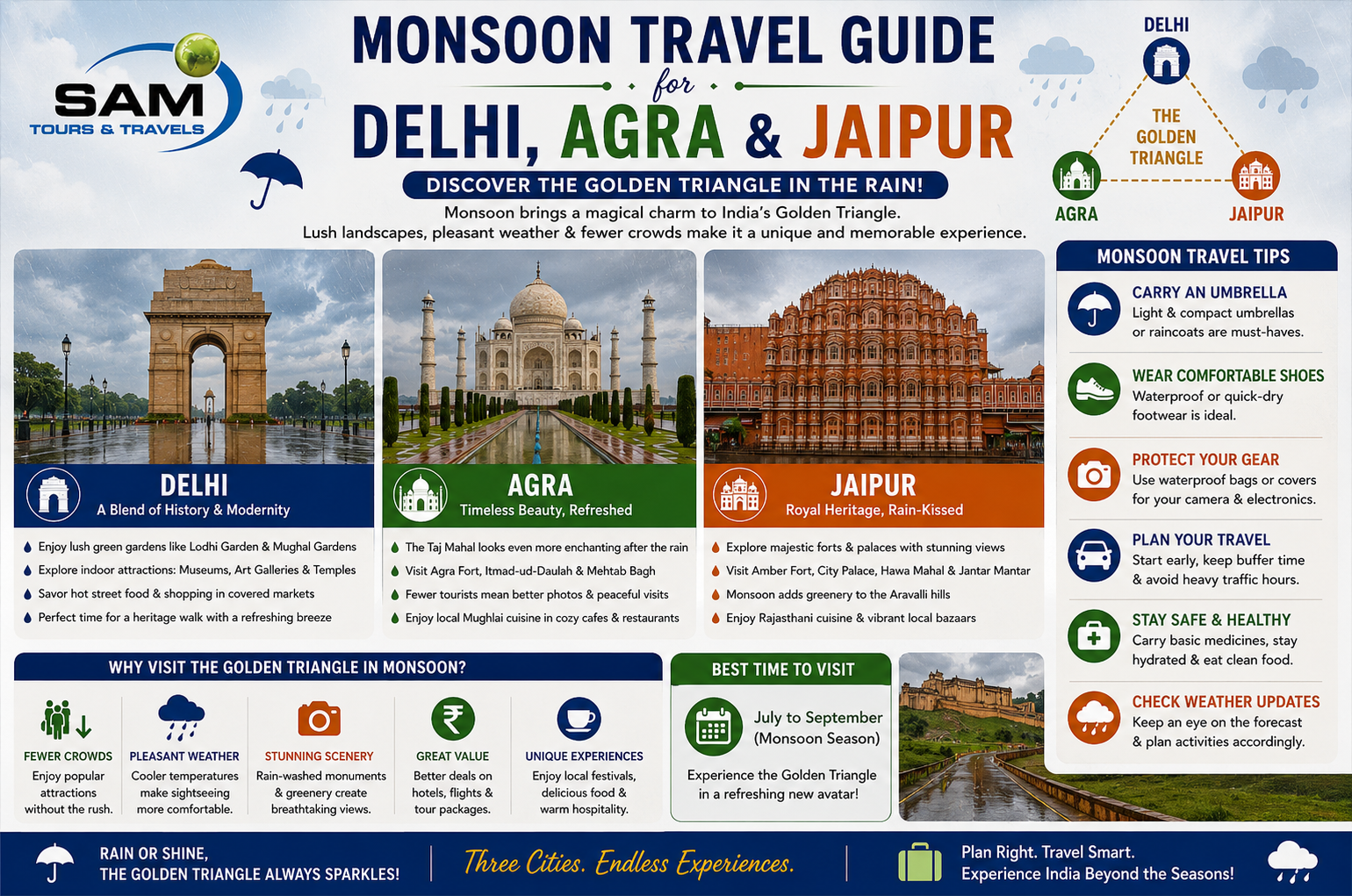
  • Monsoon Travel Guide for Delhi, Agra & Jaipur

    Monsoon Travel Guide for Delhi, Agra & Jaipur

    Introduction

    Most travelers associate the Golden Triangle with winter vacations. However, the monsoon season offers a completely different experience. Between July and September, Delhi, Agra, and Jaipur become greener, cooler, and less crowded.

    Rain showers bring new life to historic monuments, gardens, and city landscapes. In addition, hotels and tour operators often offer attractive discounts during this period.

    If you’re considering a monsoon getaway, this guide will help you plan the perfect trip through Delhi, Agra, and Jaipur.


    Why Travel During the Monsoon?

    Many travelers avoid the rainy season. However, those who visit during this time often discover a quieter and more authentic side of India.

    Benefits of Monsoon Travel

    • Fewer tourists at major attractions
    • Lower hotel rates
    • Lush green landscapes
    • Pleasant temperatures after rain
    • Better photography opportunities

    As a result, monsoon travel can offer excellent value for money.


    Weather Overview

    Delhi

    • Temperature: 25°C to 35°C
    • Frequent evening showers
    • Refreshing mornings after rainfall

    Agra

    • Temperature: 24°C to 34°C
    • Occasional rain showers
    • Greener gardens around monuments

    Jaipur

    • Temperature: 23°C to 32°C
    • Beautiful cloudy skies
    • Scenic views around forts and hills

    The weather remains much cooler compared to the summer months.


    Why Monsoon Is Great for Photography

    The rainy season creates dramatic landscapes and unique photo opportunities.

    Best Photography Advantages

    • Cloud-covered skies
    • Reflections on historic buildings
    • Vibrant greenery
    • Soft natural lighting

    Many photographers consider monsoon one of the best seasons for capturing the beauty of the Golden Triangle.


    Delhi During the Monsoon

    Delhi looks surprisingly beautiful after rainfall.

    Best Places to Visit

    Humayun’s Tomb

    The surrounding gardens become greener and more vibrant.

    Lodhi Garden

    Perfect for morning walks after a refreshing rain shower.

    India Gate

    The monument looks especially attractive during cloudy evenings.

    Hauz Khas Village

    Enjoy lakeside views, cafes, and historic ruins.

    Monsoon adds a fresh charm to many of Delhi’s outdoor attractions.


    Agra During the Monsoon

    Agra becomes cooler and more comfortable during the rainy season.

    Must-Visit Attractions

    Taj Mahal

    The white marble monument looks stunning against dark monsoon clouds.

    Mehtab Bagh

    Offers beautiful views of the Taj Mahal and the Yamuna River.

    Agra Fort

    Pleasant weather makes exploring the fort much easier.

    Tomb of Itimad-ud-Daulah

    Often called the Baby Taj, this site is less crowded during monsoon.


    Jaipur During the Monsoon

    Many travelers consider Jaipur the most beautiful Golden Triangle destination during the rainy season.

    Top Attractions

    Amber Fort

    The surrounding Aravalli Hills turn lush green after rainfall.

    Nahargarh Fort

    Offers breathtaking city views under cloudy skies.

    Jal Mahal

    The palace appears even more magical during the monsoon season.

    City Palace

    A great indoor and outdoor attraction for rainy days.


    Best Monsoon Experiences

    Enjoy Rooftop Cafes

    Many cafes in Jaipur and Delhi offer incredible views during rainy evenings.

    Explore Local Markets

    Visit:

    • Chandni Chowk
    • Johari Bazaar
    • Bapu Bazaar
    • Sadar Bazaar

    Crowds are often smaller during the monsoon months.

    Taste Seasonal Delicacies

    Enjoy:

    • Hot chai
    • Pakoras
    • Kachori
    • Traditional Indian sweets

    Rainy weather makes these local treats even more enjoyable.


    Travel Tips for the Monsoon Season

    Carry Rain Protection

    Pack:

    • Umbrella
    • Lightweight raincoat
    • Waterproof bag cover

    Wear Comfortable Footwear

    Choose shoes with good grip and quick-drying material.

    Keep Electronics Protected

    Use waterproof pouches for phones and cameras.

    Check Weather Forecasts

    Monitor local forecasts before planning outdoor activities.

    Allow Extra Travel Time

    Heavy rain may occasionally slow road traffic.


    Monsoon Travel Costs

    One of the biggest advantages of monsoon travel is affordability.

    Typical Savings

    • Lower hotel rates
    • Discounted tour packages
    • Better flight deals
    • Reduced transportation costs

    This makes monsoon an excellent choice for budget-conscious travelers.


    Who Should Travel During Monsoon?

    Monsoon travel is ideal for:

    • Photography enthusiasts
    • Budget travelers
    • Couples
    • Nature lovers
    • Repeat visitors to India

    If you prefer fewer crowds and unique scenery, the monsoon season is worth considering.


    Best Months for a Monsoon Trip

    July

    Beginning of the rainy season with cooler temperatures.

    August

    The greenest month of the year across the Golden Triangle.

    September

    One of the best months to travel, with less rainfall and pleasant weather.

    September is often considered the perfect balance between greenery and comfortable sightseeing.


    Final Thoughts

    A monsoon journey through Delhi, Agra, and Jaipur offers a unique perspective on India’s most famous travel circuit. While the Taj Mahal, Amber Fort, and India Gate remain popular attractions, the rainy season transforms them into even more beautiful destinations.

    With fewer crowds, lower prices, and stunning landscapes, monsoon travel can be one of the most rewarding times to explore the Golden Triangle. If you’re looking for a different kind of adventure, don’t overlook the magic of India’s rainy season.