Tag: City Palace Jaipur

  • A Complete Guide to Famous Forts and Palaces in the Golden Triangle

    The Golden Triangle Forts are among the greatest architectural treasures in India. Stretching across Delhi, Agra, and Jaipur, the Golden Triangle is home to magnificent forts and royal palaces that showcase the grandeur of the Mughal and Rajput eras. Every monument tells a unique story of powerful emperors, brave kings, royal families, and remarkable craftsmanship.

    From the imposing Red Fort in Delhi to the majestic Agra Fort and the breathtaking Amber Fort in Jaipur, these historical landmarks attract millions of visitors every year. Moreover, each fort and palace offers stunning architecture, fascinating history, and unforgettable photography opportunities. Whether you’re a history enthusiast, an architecture lover, or a first-time traveler, this guide will help you discover the most famous forts and palaces along the Golden Triangle route.


    Why Visit the Golden Triangle Forts?

    A Golden Triangle tour is much more than a sightseeing journey. In addition to world-famous monuments, the region allows travelers to explore India’s royal heritage through magnificent forts and palaces.

    Some reasons to visit include:

    • Discover centuries of Indian history.
    • Explore UNESCO World Heritage Sites.
    • Admire Mughal and Rajput architecture.
    • Learn about royal dynasties.
    • Capture spectacular travel photographs.

    Furthermore, every monument reflects a different chapter of India’s cultural and architectural legacy.


    1. Red Fort, Delhi

    The Red Fort is one of Delhi’s most iconic landmarks and a UNESCO World Heritage Site. Built by Emperor Shah Jahan in the 17th century, this massive red sandstone fort served as the main residence of the Mughal emperors.

    Visitors can explore:

    • Lahori Gate
    • Diwan-i-Aam
    • Diwan-i-Khas
    • Rang Mahal
    • Mumtaz Mahal

    Besides its historical importance, the fort hosts an impressive sound and light show during the evening.


    2. Agra Fort

    Located just a few kilometers from the Taj Mahal, Agra Fort is another UNESCO World Heritage Site that deserves plenty of time during your visit.

    Constructed primarily from red sandstone, the fort features magnificent palaces, audience halls, gardens, and courtyards.

    Major attractions include:

    • Jahangiri Mahal
    • Musamman Burj
    • Diwan-i-Khas
    • Diwan-i-Aam
    • Sheesh Mahal

    Interestingly, Emperor Shah Jahan spent the final years of his life imprisoned here while overlooking the Taj Mahal.


    3. Amber Fort, Jaipur

    Amber Fort is one of Rajasthan’s most spectacular hill forts. Surrounded by rugged hills and overlooking Maota Lake, it beautifully combines Rajput and Mughal architecture.

    Highlights include:

    • Sheesh Mahal
    • Ganesh Pol
    • Diwan-i-Aam
    • Diwan-i-Khas
    • Sukh Niwas

    Additionally, the fort offers breathtaking panoramic views of the surrounding landscape.


    4. City Palace, Jaipur

    Located in the heart of Jaipur, the City Palace continues to serve as the residence of the former royal family.

    Visitors can admire:

    • Peacock Gate
    • Mubarak Mahal
    • Chandra Mahal
    • Royal museums
    • Beautiful courtyards

    Unlike many historical monuments, this palace still reflects the living traditions of Rajasthan’s royal heritage.


    5. Nahargarh Fort

    Perched high above Jaipur, Nahargarh Fort offers one of the city’s finest viewpoints.

    Besides its historical value, visitors come here to enjoy:

    • Sunset views
    • City skyline
    • Historic rooms
    • Scenic photography

    Meanwhile, the peaceful atmosphere makes it an excellent escape from busy tourist areas.


    6. Jaigarh Fort

    Located close to Amber Fort, Jaigarh Fort is famous for housing the world’s largest cannon on wheels, Jaivana Cannon.

    The fort also features:

    • Watchtowers
    • Water reservoirs
    • Royal armory
    • Underground passages

    Consequently, it remains one of Jaipur’s most fascinating historical attractions.


    Architecture That Tells a Story

    Every fort and palace in the Golden Triangle reflects different architectural influences.

    For example:

    Mughal Style

    • Marble carvings
    • Symmetrical gardens
    • Large courtyards
    • Decorative arches

    Rajput Style

    • Massive gateways
    • Intricate balconies
    • Colorful frescoes
    • Ornamental windows

    Together, these styles create the unique visual identity of North India’s royal monuments.


    Best Time to Visit

    The most comfortable season for exploring the Golden Triangle Forts is between October and March.

    During this period, travelers enjoy:

    • Pleasant weather
    • Comfortable walking conditions
    • Better photography lighting
    • Outdoor cultural events

    Similarly, early morning visits help avoid crowds at popular monuments.


    Photography Tips

    If you enjoy photography, these forts provide endless creative opportunities.

    For the best results:

    • Visit during sunrise or sunset.
    • Carry a wide-angle lens.
    • Explore less crowded courtyards.
    • Capture architectural details.
    • Include surrounding landscapes.

    Above all, remember to respect photography rules at each monument.


    Helpful Travel Tips

    Before beginning your fort exploration, keep these suggestions in mind.

    • Wear comfortable shoes.
    • Carry drinking water.
    • Purchase tickets online when possible.
    • Hire a licensed guide.
    • Protect yourself from the sun.
    • Allow plenty of time for each monument.

    Careful planning helps you enjoy every attraction without feeling rushed.


    Final Thoughts

    The Golden Triangle Forts represent the grandeur, history, and architectural brilliance of India’s royal past. From the imposing Red Fort in Delhi and the magnificent Agra Fort to the elegant Amber Fort and City Palace in Jaipur, each destination offers a unique glimpse into centuries of royal heritage. Moreover, exploring these remarkable monuments allows travelers to appreciate India’s diverse cultural traditions while experiencing some of the country’s most celebrated historical landmarks.

    Whether you’re passionate about history, architecture, or photography, visiting these famous forts and palaces will undoubtedly become one of the highlights of your Golden Triangle journey.
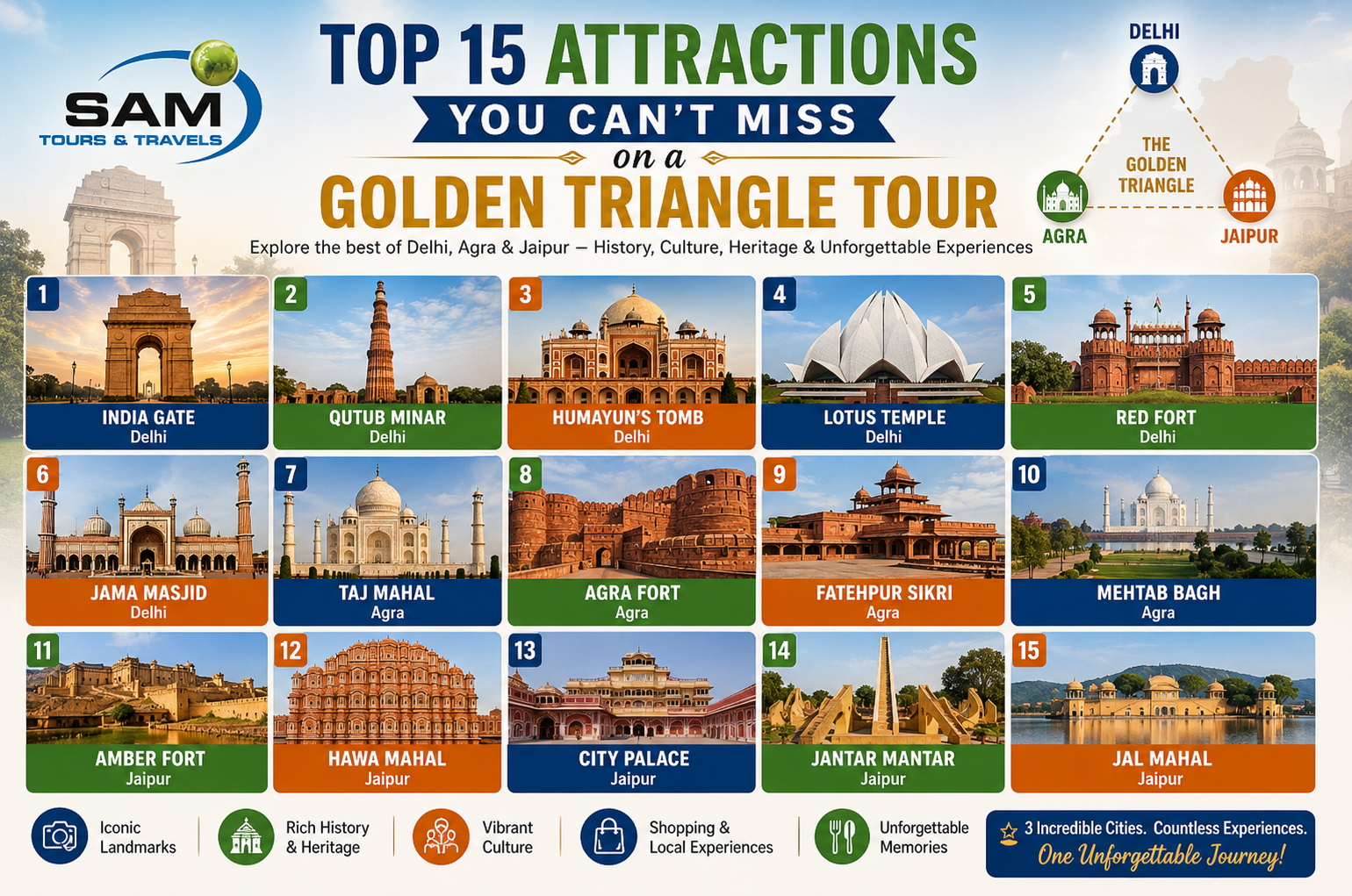
  • Top 15 Attractions You Can’t Miss on a Golden Triangle Tour

    Top 15 Attractions You Can’t Miss on a Golden Triangle Tour

    Introduction

    The Golden Triangle Tour is India’s most popular travel circuit, connecting the historic cities of Delhi, Agra, and Jaipur. This iconic route offers a perfect blend of ancient monuments, royal palaces, vibrant markets, and cultural experiences.

    If you’re planning your first visit, knowing which attractions deserve a place on your itinerary can make all the difference. In this guide, we’ll explore the top 15 attractions you can’t miss on a Golden Triangle Tour, helping you experience the very best of North India.


    1. Taj Mahal, Agra

    No Golden Triangle Tour is complete without visiting the Taj Mahal. Built by Emperor Shah Jahan as a symbol of love, this white marble masterpiece attracts millions of visitors every year.

    Why Visit?

    • One of the Seven Wonders of the World
    • UNESCO World Heritage Site
    • Stunning sunrise and sunset views

    2. Agra Fort, Agra

    Located just a few kilometers from the Taj Mahal, Agra Fort is an impressive Mughal fortress filled with palaces, gardens, and courtyards.

    Highlights

    • Jahangir Palace
    • Diwan-i-Khas
    • Musamman Burj

    3. Fatehpur Sikri

    Situated between Agra and Jaipur, Fatehpur Sikri was once the capital of the Mughal Empire.

    Must-See Attractions

    • Buland Darwaza
    • Jama Masjid
    • Panch Mahal

    4. Amber Fort, Jaipur

    Amber Fort is one of Rajasthan’s most spectacular forts. Perched on a hilltop, it offers breathtaking views and magnificent architecture.

    Why Travelers Love It

    • Sheesh Mahal (Mirror Palace)
    • Beautiful courtyards
    • Historic Rajput architecture

    5. Hawa Mahal, Jaipur

    Known as the Palace of Winds, Hawa Mahal is Jaipur’s most recognizable landmark.

    Famous For

    • Unique honeycomb façade
    • Stunning photography opportunities
    • Rich royal history

    6. City Palace, Jaipur

    The City Palace remains one of Jaipur’s most beautiful attractions. It combines Mughal and Rajput architectural styles.

    Highlights

    • Royal museums
    • Historic courtyards
    • Elegant palace interiors

    7. Jantar Mantar, Jaipur

    This UNESCO World Heritage Site features fascinating astronomical instruments built in the 18th century.

    Why Visit?

    • Ancient scientific innovation
    • Unique architectural design
    • Educational experience

    8. Qutub Minar, Delhi

    Standing at 73 meters tall, Qutub Minar is the tallest brick minaret in the world.

    Visitor Highlights

    • Intricate carvings
    • Historic ruins
    • UNESCO World Heritage status

    9. Humayun’s Tomb, Delhi

    This magnificent Mughal tomb inspired the design of the Taj Mahal.

    Reasons to Visit

    • Beautiful Persian gardens
    • Impressive architecture
    • Excellent photography location

    10. India Gate, Delhi

    India Gate is one of the most famous landmarks in the capital city.

    Best Experience

    • Evening visits
    • Family-friendly atmosphere
    • Illuminated monument views

    11. Red Fort, Delhi

    The Red Fort served as the main residence of Mughal emperors for nearly 200 years.

    What Makes It Special?

    • Massive red sandstone walls
    • Rich historical significance
    • UNESCO World Heritage Site

    12. Jama Masjid, Delhi

    One of India’s largest mosques, Jama Masjid is an architectural masterpiece in Old Delhi.

    Highlights

    • Grand courtyard
    • Stunning city views
    • Historical importance

    13. Chandni Chowk, Delhi

    Chandni Chowk offers a completely different side of the Golden Triangle experience.

    Don’t Miss

    • Street food
    • Local markets
    • Rickshaw rides through narrow lanes

    14. Jal Mahal, Jaipur

    Located in the middle of Man Sagar Lake, Jal Mahal is one of Jaipur’s most photographed landmarks.

    Why It’s Popular

    • Scenic lake views
    • Peaceful surroundings
    • Excellent photo opportunities

    15. Mehtab Bagh, Agra

    Mehtab Bagh provides one of the best views of the Taj Mahal from across the Yamuna River.

    Best Time to Visit

    • Sunset hours
    • Photography sessions
    • Quiet sightseeing experience

    How Many Days Are Needed to Visit These Attractions?

    Most travelers can comfortably explore these attractions during a 5 to 7-day Golden Triangle Tour. However, adding an extra day allows for a more relaxed experience and deeper cultural exploration.


    Travel Tips for Visiting Golden Triangle Attractions

    Start Early

    Popular sites such as the Taj Mahal and Amber Fort become crowded later in the day.

    Book Tickets Online

    Online bookings save time and help avoid long queues.

    Carry Comfortable Footwear

    You’ll spend many hours walking through forts, palaces, and historical complexes.

    Stay Hydrated

    Carry water, especially during warmer months.

    Hire a Local Guide

    Professional guides can help you understand the history behind each monument.


    Conclusion

    The Golden Triangle Tour showcases some of India’s most remarkable attractions. From the timeless beauty of the Taj Mahal and the grandeur of Agra Fort to the royal elegance of Jaipur and the historic charm of Delhi, every stop offers unforgettable experiences.

    If you’re planning a Golden Triangle journey, make sure these 15 attractions are on your itinerary. Together, they tell the story of India’s rich heritage, architectural brilliance, and vibrant culture.