Tag: Golden Triangle Tour

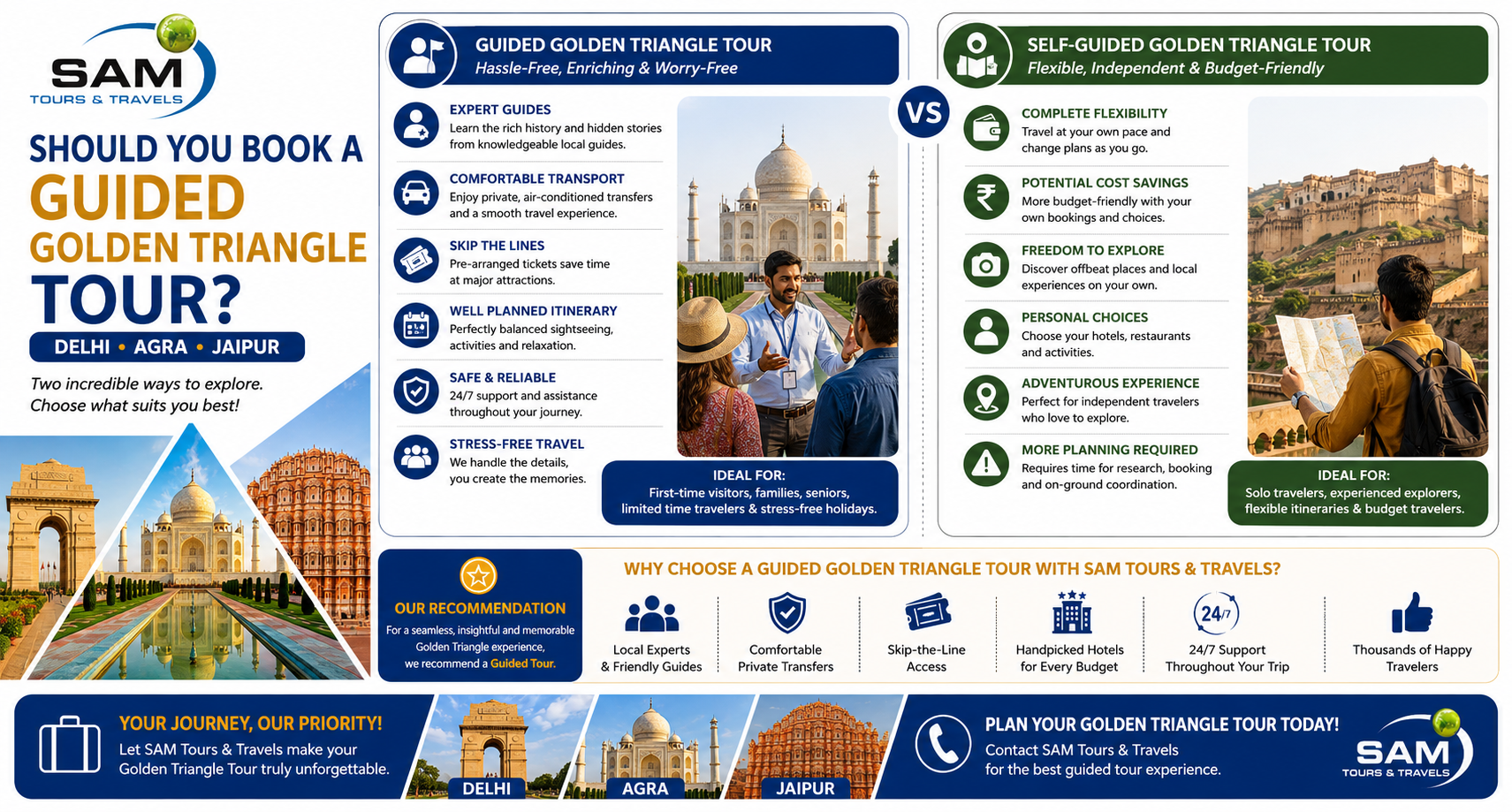
  • Should You Book a Guided Golden Triangle Tour?

    Should You Book a Guided Golden Triangle Tour?

    Planning a trip to India is exciting, especially when you’re exploring the famous Golden Triangle. This iconic travel circuit connects Delhi, Agra, and Jaipur, giving travelers the opportunity to experience India’s rich history, royal heritage, and vibrant culture. However, before booking your trip, you may wonder whether you should travel independently or choose a Guided Golden Triangle Tour.

    Both options have their advantages. However, for many travelers—especially first-time visitors—a guided tour offers convenience, comfort, and a stress-free experience. From transportation and accommodation to sightseeing and local insights, guided tours simplify every part of the journey.

    In this guide, we’ll explain the benefits of a Guided Golden Triangle Tour and help you decide whether it’s the right choice for your next adventure.


    What Is a Guided Golden Triangle Tour?

    A Guided Golden Triangle Tour is a professionally organized travel package that includes transportation, accommodation, sightseeing, and the services of an experienced guide. Instead of planning every detail yourself, the tour operator manages the logistics, allowing you to focus on enjoying your trip.

    Most guided tours cover the three famous cities:

    • Delhi
    • Agra
    • Jaipur

    Many packages also include nearby attractions such as Fatehpur Sikri, Abhaneri Stepwell, or Ranthambore National Park, depending on the itinerary.


    Benefits of Booking a Guided Tour

    Stress-Free Travel Planning

    Planning a multi-city trip can take time. You need to book hotels, transportation, attraction tickets, and local transfers.

    With a guided tour, everything is arranged before your arrival. Therefore, you can relax and enjoy your holiday without worrying about travel logistics.


    Expert Local Guides

    One of the biggest advantages of a guided tour is the knowledge provided by experienced guides.

    Instead of simply looking at monuments, you’ll learn fascinating stories about the Mughal Empire, Rajput kings, and India’s cultural heritage.

    Moreover, guides answer your questions and help you understand the history behind every attraction.


    Comfortable Transportation

    Most Guided Golden Triangle Tours include a private air-conditioned vehicle with a professional driver.

    This means you don’t have to navigate unfamiliar roads, search for taxis, or manage public transportation.

    Furthermore, private vehicles allow flexible stops for meals, photography, and short breaks during the journey.


    Better Time Management

    A well-planned itinerary helps you make the most of your vacation.

    Professional tour operators know the best times to visit popular attractions, helping you avoid heavy crowds whenever possible.

    As a result, you spend more time exploring and less time waiting.


    Safe and Convenient

    Safety is a major concern for many first-time travelers.

    Guided tours reduce stress by providing reliable transportation, verified hotels, and experienced local support throughout the trip.

    Additionally, many operators offer 24-hour customer assistance in case you need help during your journey.


    Guided Tour vs Independent Travel

    FeatureGuided TourIndependent Travel
    Trip PlanningFully organizedSelf-planned
    TransportationIncludedSeparate bookings
    Tour GuideProfessional guideSelf-guided
    Local KnowledgeExcellentLimited
    ConvenienceVery HighModerate
    FlexibilityGoodHigh
    Stress LevelLowHigher
    Suitable for First-Time VisitorsExcellentModerate

    Who Should Book a Guided Golden Triangle Tour?

    A guided tour is ideal for:

    • First-time visitors to India
    • Families with children
    • Senior travelers
    • Couples
    • International tourists
    • Solo travelers seeking convenience
    • Travelers with limited vacation time

    If you prefer a smooth and organized experience, a guided tour is an excellent choice.


    Are Guided Tours Worth the Cost?

    Although guided tours may cost slightly more than planning everything yourself, they often provide better overall value.

    Most packages include:

    • Hotel accommodation
    • Private transportation
    • Experienced driver
    • Professional guide
    • Airport transfers
    • Sightseeing assistance

    When you compare these services individually, guided tours frequently save both time and money.


    Tips Before Booking

    Before confirming your tour, remember to:

    • Compare multiple itineraries.
    • Check hotel categories.
    • Read customer reviews.
    • Confirm what’s included.
    • Choose a trusted tour operator.
    • Ask about customization options.

    A little research helps you select the best package for your travel style.


    Conclusion

    A Guided Golden Triangle Tour is one of the easiest and most enjoyable ways to explore Delhi, Agra, and Jaipur. It combines expert guidance, comfortable transportation, carefully selected hotels, and well-planned itineraries into one seamless travel experience.

    Whether you’re visiting India for the first time or returning to discover more of its incredible heritage, a guided tour allows you to focus on creating unforgettable memories instead of managing travel arrangements. If you value convenience, local expertise, and a stress-free holiday, booking a Guided Golden Triangle Tour is undoubtedly a smart choice.
  • Golden Triangle Tour by Flight vs Road: Which Is Better?

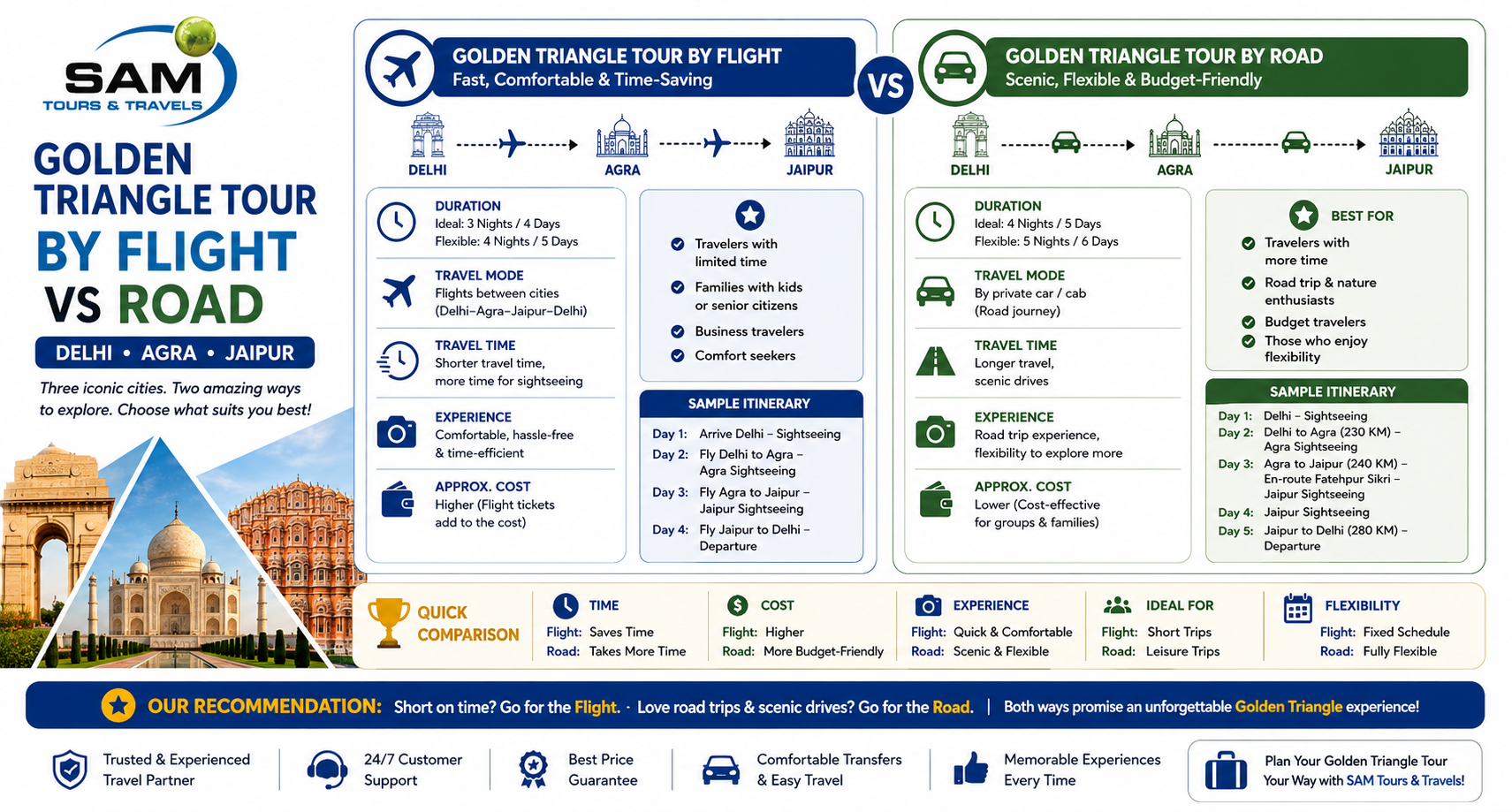
    Golden Triangle Tour by Flight vs Road: Which Is Better?

    Planning a Golden Triangle Tour is exciting, but one important question often comes to mind: Should you travel by flight or by road? Both options have their own advantages, and the right choice depends on your budget, travel style, available time, and sightseeing preferences.

    The Golden Triangle Tour connects Delhi, Agra, and Jaipur, three of India’s most iconic tourist destinations. Every year, millions of travelers choose this route because it offers a perfect mix of history, culture, architecture, and local experiences. However, selecting the right mode of transportation can make a significant difference to your overall journey.

    In this guide, we’ll compare traveling by flight and road so you can decide which option suits your travel plans.


    Understanding the Golden Triangle Route

    Before comparing the two travel options, it’s helpful to understand the route itself.

    The traditional Golden Triangle itinerary includes:

    • Delhi
    • Agra
    • Jaipur
    • Return to Delhi

    The total distance is approximately 720–750 kilometers, depending on your chosen route.

    Because these cities are well connected by expressways and highways, many travelers prefer a road trip. However, flights are also available between some major cities for those who want to save time.


    Golden Triangle Tour by Road

    Traveling by road is the most popular way to experience the Golden Triangle. It offers flexibility, comfort, and the opportunity to explore attractions that you might otherwise miss.

    Modern highways such as the Yamuna Expressway and the Delhi–Mumbai Expressway corridor have made road travel much faster than before. As a result, thousands of tourists now prefer private cars for this journey.

    Moreover, traveling by road allows you to stop whenever you like. You can enjoy local restaurants, photograph beautiful landscapes, or visit hidden attractions along the route.


    Advantages of Traveling by Road

    Enjoy Sightseeing Along the Way

    One of the biggest benefits of a road trip is the freedom to explore places between the main cities.

    For example, you can visit:

    • Fatehpur Sikri
    • Abhaneri Stepwell
    • Bharatpur Bird Sanctuary
    • Chand Baori
    • Local villages
    • Highway cafés

    These destinations are difficult to include when traveling by flight.


    Flexible Schedule

    Road travel gives you complete control over your itinerary.

    Instead of following airline schedules, you can decide:

    • When to leave
    • Where to stop
    • How long to stay
    • Which attractions to visit

    Therefore, road trips provide a much more personalized experience.


    Comfortable Family Travel

    Families often choose private cars because they offer greater comfort.

    Children can relax during the journey, elderly travelers don’t need to change terminals, and luggage remains safely stored inside the vehicle.

    Furthermore, travelers don’t need to worry about baggage limits or airport security procedures.


    Better Photography Opportunities

    India’s countryside offers many beautiful landscapes.

    During a road trip, you can stop at scenic viewpoints, mustard fields, rural villages, historic gateways, and traditional roadside markets.

    Consequently, photographers often prefer road travel over flights.


    Golden Triangle Tour by Flight

    Flights are ideal for travelers who have limited time.

    Instead of spending several hours on the road, passengers can reach their destination much faster.

    This option works especially well for business travelers or tourists planning a short vacation.


    Advantages of Traveling by Flight

    Save Valuable Time

    The biggest advantage of flying is speed.

    A flight between major cities usually takes around one to two hours.

    Therefore, travelers can spend more time exploring attractions instead of traveling.


    Comfortable for Long-Distance Travelers

    International visitors often prefer flights because they reduce travel fatigue.

    After arriving in India, many travelers appreciate shorter domestic journeys.

    Moreover, flights help avoid long road trips during extremely hot summer months.


    Frequent Flight Options

    Major airlines operate regular services between Delhi and Jaipur as well as Delhi and other major Indian cities.

    As domestic aviation continues to grow, travelers have more options than ever before.


    Ideal for Luxury Holidays

    Luxury travelers often combine premium hotels with domestic flights.

    This creates a fast and comfortable vacation while minimizing travel time.


    Flight vs Road: Quick Comparison

    FeatureBy RoadBy Flight
    FlexibilityExcellentLimited
    SightseeingHighVery Limited
    Travel TimeLongerFaster
    Photography StopsYesNo
    Luggage ConvenienceExcellentAirline Restrictions
    Family FriendlyExcellentGood
    Budget FriendlyOften Better for GroupsBetter for Solo Travelers
    Hidden AttractionsEasy to VisitDifficult
    Local ExperiencesPlentyLimited
    ComfortHigh with Private CarHigh During Flight

    Which Option Is More Budget-Friendly?

    Budget plays an important role while planning any trip.

    Road travel usually offers better value for families and groups because everyone can share one private vehicle.

    For example, four travelers hiring one cab often spend less than purchasing four domestic flight tickets.

    Additionally, road trips eliminate airport transfers and extra baggage charges.

    Flights, on the other hand, can be economical for solo travelers if tickets are booked well in advance.

    Therefore, your total travel cost depends on the number of travelers and your booking schedule.


    Which Option Offers Better Sightseeing?

    Road travel clearly wins when it comes to sightseeing.

    Instead of moving directly from one airport to another, travelers enjoy beautiful landscapes, roadside restaurants, historical monuments, and small cultural towns.

    You can also take breaks whenever you want without following a fixed schedule.

    Flights simply transport you between cities. Although they save time, they don’t offer the same travel experience.

    For travelers who want to explore India beyond its famous monuments, road travel remains the better choice.


    Which Is More Comfortable?

    Comfort depends on personal preference.

    Flights reduce travel time, making them attractive for business travelers and visitors with limited holidays.

    However, private road journeys offer spacious seating, flexible stops, and personalized travel.

    Many Golden Triangle Tour Packages include luxury SUVs or premium sedans with experienced drivers, making long journeys surprisingly relaxing.

    As a result, families and couples often prefer road travel over domestic flights.

  • What Is the Golden Triangle Tour?

    The Golden Triangle Tour is India’s most famous travel circuit, connecting the three historic cities of Delhi, Agra, and Jaipur. These cities form a triangle on the map, which is why the route is known as the “Golden Triangle.” Every year, millions of domestic and international tourists choose this journey because it offers the perfect introduction to India’s history, culture, architecture, and traditions.

    Whether you’re visiting India for the first time or returning to explore more of its heritage, the Golden Triangle Tour provides an unforgettable experience. In just a few days, travelers can witness magnificent forts, royal palaces, UNESCO World Heritage Sites, bustling markets, and authentic Indian cuisine. Moreover, the route is well connected by highways, railways, and airports, making travel comfortable and convenient.


    The Three Cities That Make Up the Golden Triangle

    The Golden Triangle Tour covers three iconic destinations, each offering a unique travel experience.

    Delhi – The Historic Capital of India

    Delhi is the starting point for most Golden Triangle itineraries. As India’s capital city, it beautifully combines ancient history with modern development. Travelers can explore impressive monuments such as the Red Fort, Qutub Minar, India Gate, Humayun’s Tomb, and Lotus Temple. At the same time, Delhi offers vibrant markets, luxury shopping malls, museums, and diverse restaurants.

    Besides sightseeing, visitors can experience the lively atmosphere of Chandni Chowk, taste delicious street food, and learn about India’s rich cultural heritage.


    Agra – Home of the Taj Mahal

    After Delhi, travelers continue to Agra, one of India’s most visited tourist destinations. The city is world-famous for the Taj Mahal, a UNESCO World Heritage Site and one of the Seven Wonders of the World.

    However, Agra offers much more than the Taj Mahal. Visitors can also explore Agra Fort, Mehtab Bagh, and Fatehpur Sikri, each reflecting the grandeur of the Mughal Empire. Consequently, Agra becomes an essential stop for anyone interested in history and architecture.


    Jaipur – The Royal Pink City

    The final destination is Jaipur, the capital of Rajasthan. Known as the Pink City, Jaipur welcomes visitors with magnificent forts, royal palaces, colorful markets, and warm hospitality.

    Popular attractions include Amber Fort, City Palace, Hawa Mahal, Jantar Mantar, Nahargarh Fort, and Jal Mahal. Furthermore, Jaipur is one of India’s best shopping destinations, offering traditional jewelry, blue pottery, block-printed textiles, leather products, and handcrafted souvenirs.


    Why Is It Called the Golden Triangle?

    The route gets its name from the triangular shape formed by Delhi, Agra, and Jaipur on the map of North India. Each city lies approximately 200–300 kilometers from the others, creating a convenient travel circuit.

    Moreover, the word “Golden” represents the incredible cultural, historical, and architectural treasures found throughout these destinations. Together, these cities showcase the very best of India’s heritage and tourism.


    Why Is the Golden Triangle Tour So Popular?

    The Golden Triangle Tour remains India’s most popular travel route because it offers a complete travel experience within a short period.

    Unlike many other destinations, this tour combines:

    • Historic monuments
    • UNESCO World Heritage Sites
    • Royal palaces and forts
    • Local markets
    • Traditional Indian cuisine
    • Cultural performances
    • Luxury and budget accommodation
    • Comfortable transportation

    As a result, travelers enjoy history, culture, food, shopping, and sightseeing in one unforgettable journey.


    How Many Days Do You Need?

    Most travelers choose a 5 to 7-day itinerary to explore the Golden Triangle comfortably.

    A typical itinerary includes:

    • Day 1–2: Delhi sightseeing
    • Day 3: Agra sightseeing
    • Day 4–5: Jaipur sightseeing
    • Optional Days: Fatehpur Sikri, Abhaneri Stepwell, Ranthambore National Park, or nearby destinations

    However, shorter 3-day and 4-day tours are also available for travelers with limited time.


    What Can You Experience During the Tour?

    One of the biggest advantages of the Golden Triangle Tour is the variety of experiences it offers.

    During your journey, you can:

    • Watch the sunrise over the Taj Mahal.
    • Explore centuries-old forts and palaces.
    • Visit UNESCO World Heritage Sites.
    • Shop for handicrafts and souvenirs.
    • Taste authentic Indian and Rajasthani cuisine.
    • Enjoy cultural performances and folk music.
    • Capture breathtaking photographs of India’s most famous landmarks.

    Therefore, every day of the tour offers something new and memorable.


    Who Should Choose the Golden Triangle Tour?

    The Golden Triangle Tour is suitable for almost every type of traveler.

    It is ideal for:

    • First-time visitors to India
    • Couples
    • Families
    • Solo travelers
    • Senior citizens
    • Photography enthusiasts
    • History lovers
    • International tourists

    Because the route offers excellent infrastructure and professional tourism services, even first-time visitors can travel comfortably and confidently.


    Why Choose a Golden Triangle Tour Package?

    Booking a Golden Triangle Tour Package makes your journey simple and stress-free.

    Most tour packages include:

    • Comfortable hotel accommodation
    • Private air-conditioned vehicle
    • Professional driver
    • Guided sightseeing
    • Airport pickup and drop-off
    • Flexible travel itinerary

    Moreover, booking a package often saves both time and money compared to arranging every service separately.


    Conclusion

    The Golden Triangle Tour is much more than a sightseeing trip—it’s a journey through India’s rich history, royal heritage, vibrant culture, and architectural wonders. By connecting Delhi, Agra, and Jaipur, this iconic route allows travelers to experience the country’s most celebrated destinations in one well-planned itinerary.

    Whether you’re exploring the majestic Taj Mahal, discovering the royal forts of Jaipur, or walking through the historic streets of Delhi, every moment offers a unique and memorable experience. If you’re planning your first trip to India, the Golden Triangle Tour is undoubtedly the perfect place to begin your adventure.

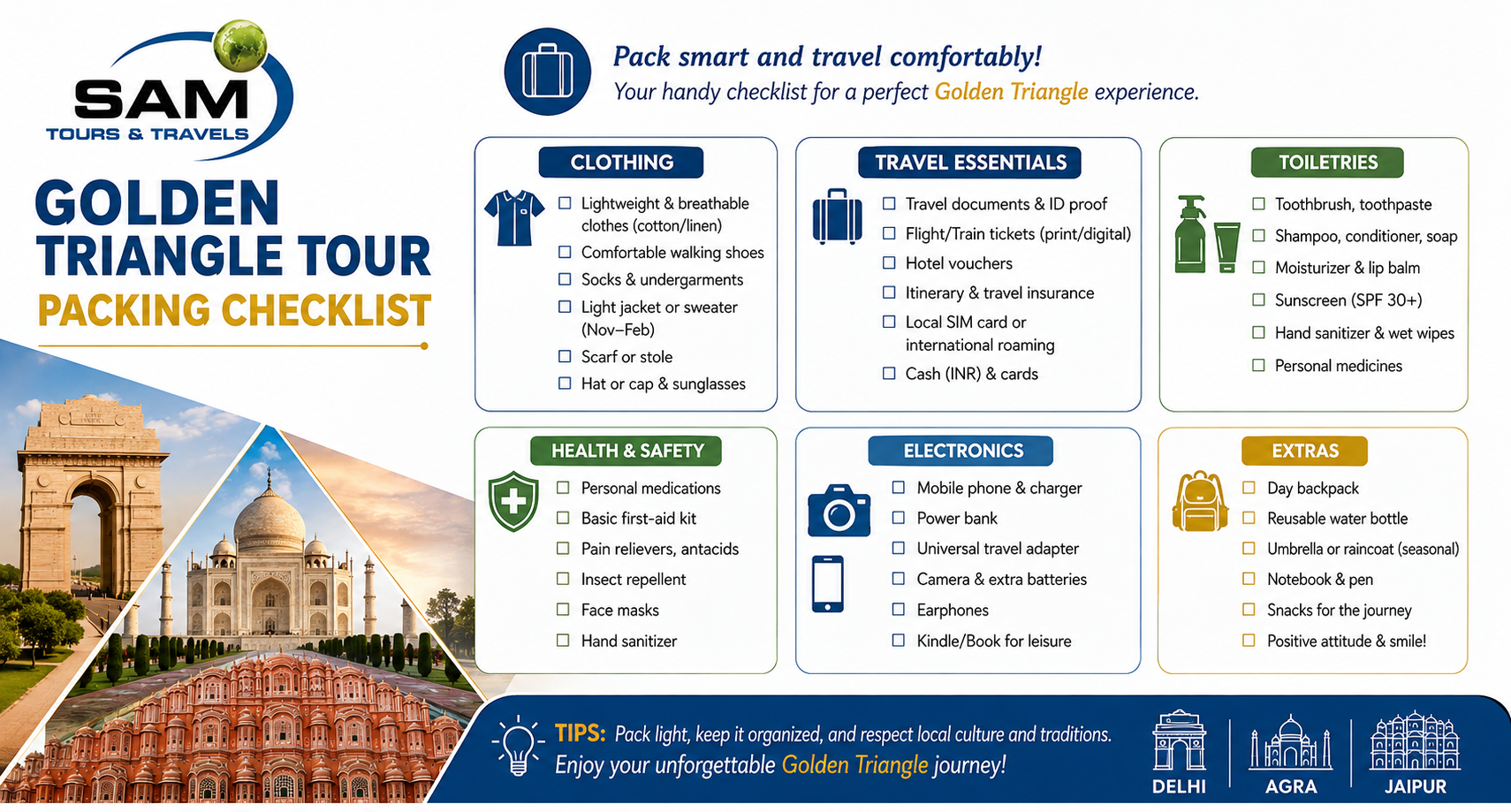
  • Golden Triangle Tour Packing Checklist: What to Pack for a Hassle-Free Trip

    Golden Triangle Tour Packing Checklist: What to Pack for a Hassle-Free Trip

    Packing for a vacation can be exciting, but it can also feel overwhelming if you’re visiting a new country. A Golden Triangle Tour Packing Checklist helps you prepare for your journey so you can travel comfortably and enjoy every moment without worrying about forgotten essentials.

    The Golden Triangle Tour takes you through Delhi, Agra, and Jaipur, three of India’s most iconic destinations. From exploring the magnificent Taj Mahal to walking through the bustling streets of Old Delhi and discovering the royal palaces of Jaipur, you’ll spend long hours sightseeing, shopping, and experiencing different climates. Therefore, packing wisely is just as important as planning your itinerary.

    This guide covers everything you need to pack for your Golden Triangle Tour, whether you’re traveling in summer, winter, or the monsoon season.


    Why Is a Packing Checklist Important?

    Many travelers focus on booking flights and hotels but overlook the importance of packing the right items. A well-planned packing list saves time, prevents unnecessary shopping during your trip, and ensures you’re prepared for different weather conditions.

    Since the Golden Triangle includes busy cities, historical monuments, and outdoor attractions, you’ll need clothing and accessories that are both comfortable and practical. Moreover, carrying the right travel essentials allows you to enjoy sightseeing without interruptions.

    By following this checklist, you can travel confidently and make the most of your Golden Triangle adventure.


    Essential Travel Documents

    Before you start packing clothes and accessories, organize all your important travel documents. Keeping them in one secure travel folder makes your journey smoother.

    Make sure you carry:

    • Passport with at least six months of validity
    • Indian visa (if required)
    • Flight tickets
    • Hotel booking confirmations
    • Golden Triangle tour voucher
    • Travel insurance documents
    • Government-issued photo ID
    • Copies of important documents (both printed and digital)

    It’s also a good idea to save digital copies of these documents on your phone or cloud storage in case of emergencies.


    Clothing to Pack

    The weather in Delhi, Agra, and Jaipur changes throughout the year, so your clothing should match the season of your visit.

    Summer (April to June)

    Summer temperatures often rise above 40°C, making lightweight clothing essential.

    Pack:

    • Cotton T-shirts
    • Light trousers
    • Shorts (for casual outings)
    • Comfortable dresses
    • Breathable shirts
    • Sun hat or cap
    • Sunglasses

    Choose light-colored clothes because they reflect heat and keep you cooler during sightseeing.


    Winter (October to February)

    Winter mornings and evenings can be surprisingly cold, especially in Delhi and Jaipur.

    Carry:

    • Light jacket
    • Sweater
    • Full-sleeve shirts
    • Jeans or trousers
    • Comfortable closed shoes
    • Warm scarf

    Layering your clothes is the best way to stay comfortable throughout the day.


    Monsoon (July to September)

    Although rainfall is moderate, sudden showers are common.

    Pack:

    • Waterproof jacket
    • Foldable umbrella
    • Quick-dry clothing
    • Waterproof footwear
    • Extra socks

    These items will help you stay comfortable while exploring outdoor attractions.


    Comfortable Footwear

    A Golden Triangle Tour involves a significant amount of walking. You’ll visit large forts, expansive palace complexes, gardens, and bustling local markets. Comfortable footwear can make a noticeable difference to your travel experience.

    Pack:

    • Walking shoes
    • Lightweight sneakers
    • Comfortable sandals
    • Flip-flops for the hotel

    Avoid wearing brand-new shoes during your trip, as they may cause discomfort or blisters.


    Day Bag Essentials

    While exploring Delhi, Agra, and Jaipur, it’s practical to carry a small backpack or crossbody bag with the items you’ll need throughout the day.

    Your day bag should include:

    • Reusable water bottle
    • Power bank
    • Mobile charger
    • Sunglasses
    • Sunscreen
    • Lip balm
    • Hand sanitizer
    • Wet wipes
    • Small notebook and pen

    Keeping these essentials within easy reach will make your sightseeing much more convenient.

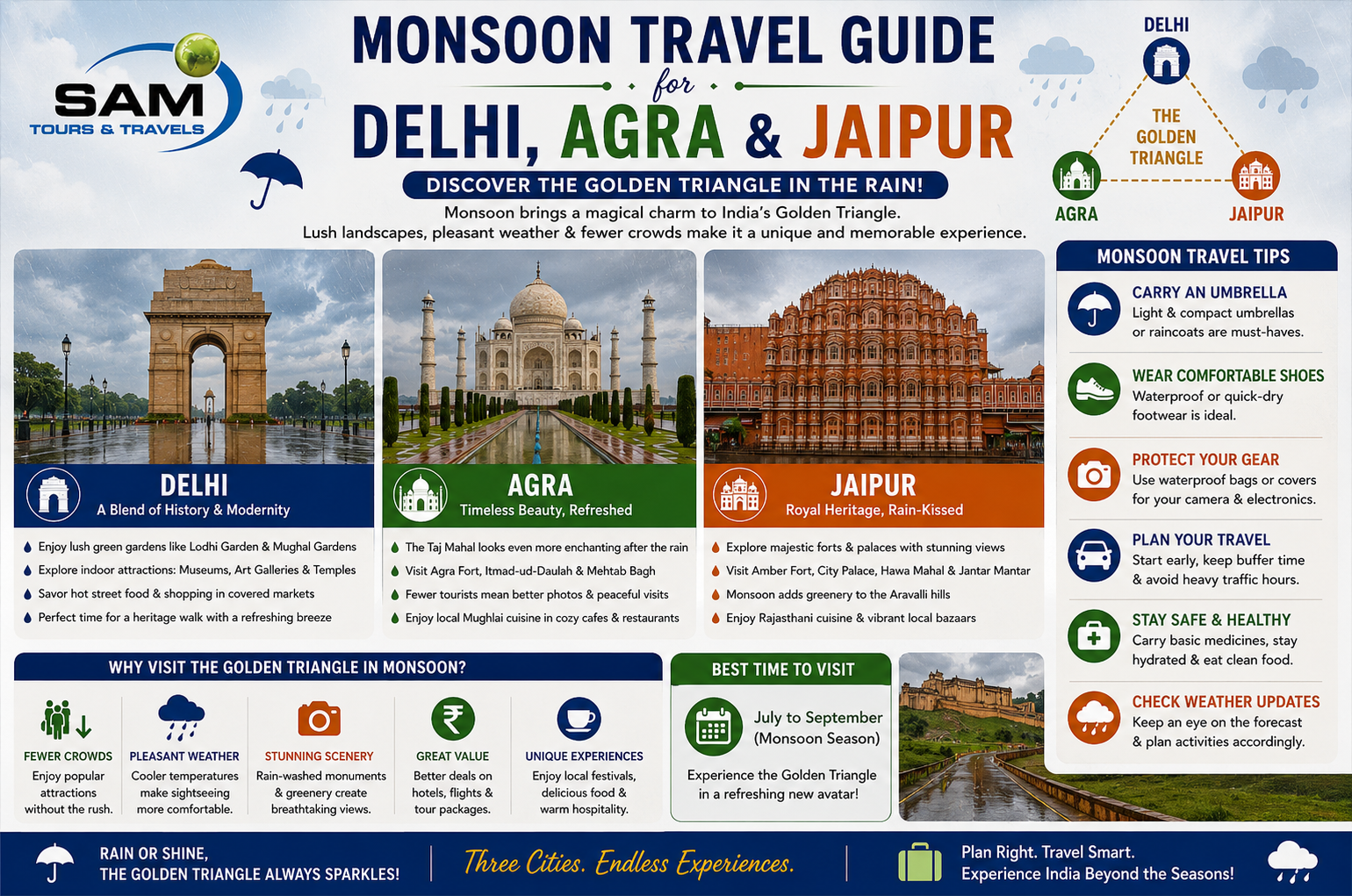
  • Monsoon Travel Guide for Delhi, Agra & Jaipur

    Monsoon Travel Guide for Delhi, Agra & Jaipur

    Introduction

    Most travelers associate the Golden Triangle with winter vacations. However, the monsoon season offers a completely different experience. Between July and September, Delhi, Agra, and Jaipur become greener, cooler, and less crowded.

    Rain showers bring new life to historic monuments, gardens, and city landscapes. In addition, hotels and tour operators often offer attractive discounts during this period.

    If you’re considering a monsoon getaway, this guide will help you plan the perfect trip through Delhi, Agra, and Jaipur.


    Why Travel During the Monsoon?

    Many travelers avoid the rainy season. However, those who visit during this time often discover a quieter and more authentic side of India.

    Benefits of Monsoon Travel

    • Fewer tourists at major attractions
    • Lower hotel rates
    • Lush green landscapes
    • Pleasant temperatures after rain
    • Better photography opportunities

    As a result, monsoon travel can offer excellent value for money.


    Weather Overview

    Delhi

    • Temperature: 25°C to 35°C
    • Frequent evening showers
    • Refreshing mornings after rainfall

    Agra

    • Temperature: 24°C to 34°C
    • Occasional rain showers
    • Greener gardens around monuments

    Jaipur

    • Temperature: 23°C to 32°C
    • Beautiful cloudy skies
    • Scenic views around forts and hills

    The weather remains much cooler compared to the summer months.


    Why Monsoon Is Great for Photography

    The rainy season creates dramatic landscapes and unique photo opportunities.

    Best Photography Advantages

    • Cloud-covered skies
    • Reflections on historic buildings
    • Vibrant greenery
    • Soft natural lighting

    Many photographers consider monsoon one of the best seasons for capturing the beauty of the Golden Triangle.


    Delhi During the Monsoon

    Delhi looks surprisingly beautiful after rainfall.

    Best Places to Visit

    Humayun’s Tomb

    The surrounding gardens become greener and more vibrant.

    Lodhi Garden

    Perfect for morning walks after a refreshing rain shower.

    India Gate

    The monument looks especially attractive during cloudy evenings.

    Hauz Khas Village

    Enjoy lakeside views, cafes, and historic ruins.

    Monsoon adds a fresh charm to many of Delhi’s outdoor attractions.


    Agra During the Monsoon

    Agra becomes cooler and more comfortable during the rainy season.

    Must-Visit Attractions

    Taj Mahal

    The white marble monument looks stunning against dark monsoon clouds.

    Mehtab Bagh

    Offers beautiful views of the Taj Mahal and the Yamuna River.

    Agra Fort

    Pleasant weather makes exploring the fort much easier.

    Tomb of Itimad-ud-Daulah

    Often called the Baby Taj, this site is less crowded during monsoon.


    Jaipur During the Monsoon

    Many travelers consider Jaipur the most beautiful Golden Triangle destination during the rainy season.

    Top Attractions

    Amber Fort

    The surrounding Aravalli Hills turn lush green after rainfall.

    Nahargarh Fort

    Offers breathtaking city views under cloudy skies.

    Jal Mahal

    The palace appears even more magical during the monsoon season.

    City Palace

    A great indoor and outdoor attraction for rainy days.


    Best Monsoon Experiences

    Enjoy Rooftop Cafes

    Many cafes in Jaipur and Delhi offer incredible views during rainy evenings.

    Explore Local Markets

    Visit:

    • Chandni Chowk
    • Johari Bazaar
    • Bapu Bazaar
    • Sadar Bazaar

    Crowds are often smaller during the monsoon months.

    Taste Seasonal Delicacies

    Enjoy:

    • Hot chai
    • Pakoras
    • Kachori
    • Traditional Indian sweets

    Rainy weather makes these local treats even more enjoyable.


    Travel Tips for the Monsoon Season

    Carry Rain Protection

    Pack:

    • Umbrella
    • Lightweight raincoat
    • Waterproof bag cover

    Wear Comfortable Footwear

    Choose shoes with good grip and quick-drying material.

    Keep Electronics Protected

    Use waterproof pouches for phones and cameras.

    Check Weather Forecasts

    Monitor local forecasts before planning outdoor activities.

    Allow Extra Travel Time

    Heavy rain may occasionally slow road traffic.


    Monsoon Travel Costs

    One of the biggest advantages of monsoon travel is affordability.

    Typical Savings

    • Lower hotel rates
    • Discounted tour packages
    • Better flight deals
    • Reduced transportation costs

    This makes monsoon an excellent choice for budget-conscious travelers.


    Who Should Travel During Monsoon?

    Monsoon travel is ideal for:

    • Photography enthusiasts
    • Budget travelers
    • Couples
    • Nature lovers
    • Repeat visitors to India

    If you prefer fewer crowds and unique scenery, the monsoon season is worth considering.


    Best Months for a Monsoon Trip

    July

    Beginning of the rainy season with cooler temperatures.

    August

    The greenest month of the year across the Golden Triangle.

    September

    One of the best months to travel, with less rainfall and pleasant weather.

    September is often considered the perfect balance between greenery and comfortable sightseeing.


    Final Thoughts

    A monsoon journey through Delhi, Agra, and Jaipur offers a unique perspective on India’s most famous travel circuit. While the Taj Mahal, Amber Fort, and India Gate remain popular attractions, the rainy season transforms them into even more beautiful destinations.

    With fewer crowds, lower prices, and stunning landscapes, monsoon travel can be one of the most rewarding times to explore the Golden Triangle. If you’re looking for a different kind of adventure, don’t overlook the magic of India’s rainy season.

  • Golden Triangle Tour in Winter: Why It’s the Best Season

    Golden Triangle Tour in Winter: Why It’s the Best Season

    Introduction

    If you’re planning a trip to India, winter is often considered the best time to explore the famous Golden Triangle. Covering Delhi, Agra, and Jaipur, this iconic route attracts travelers from around the world. While the Golden Triangle can be visited throughout the year, winter offers the most comfortable weather and the best sightseeing conditions.

    From pleasant temperatures and clear skies to vibrant festivals and stunning photography opportunities, winter transforms the Golden Triangle into a traveler’s paradise. In this guide, you’ll discover why the winter season is the perfect time for a Golden Triangle Tour.


    What Is the Golden Triangle Tour?

    The Golden Triangle connects three of North India’s most famous cities:

    • Delhi – India’s capital city
    • Agra – Home of the Taj Mahal
    • Jaipur – Rajasthan’s Pink City

    Together, these destinations showcase India’s rich history, culture, architecture, and traditions. Most travelers complete the route in 5 to 7 days.


    Pleasant Weather for Sightseeing

    One of the biggest advantages of visiting during winter is the comfortable climate.

    Average Winter Temperatures

    • Delhi: 8°C to 24°C
    • Agra: 7°C to 25°C
    • Jaipur: 8°C to 26°C

    Unlike the intense summer heat, winter allows visitors to explore monuments and markets without exhaustion.

    As a result, travelers can spend more time outdoors and enjoy a relaxed sightseeing experience.


    Perfect Conditions for Visiting the Taj Mahal

    The Taj Mahal looks especially beautiful during winter mornings.

    Why Winter Is Ideal

    • Soft sunlight improves photography.
    • Comfortable temperatures make exploration easier.
    • Clear skies create stunning views.

    Many visitors consider sunrise at the Taj Mahal during winter one of the most memorable experiences in India.


    Explore Forts and Palaces Comfortably

    The Golden Triangle is filled with large forts, palaces, and historical sites.

    Popular attractions include:

    • Amber Fort
    • City Palace
    • Agra Fort
    • Red Fort
    • Qutub Minar

    During winter, walking through these vast complexes becomes much more enjoyable.


    Best Season for Photography

    Photography enthusiasts love the Golden Triangle during winter.

    Benefits for Photographers

    • Golden morning light
    • Pleasant outdoor conditions
    • Clear landscapes
    • Better visibility

    Whether you’re capturing the Taj Mahal, Jaipur’s palaces, or Delhi’s monuments, winter offers excellent opportunities for stunning photos.


    Experience India’s Festival Season

    Winter is also one of India’s most vibrant festival seasons.

    Depending on your travel dates, you may experience:

    Diwali (Late Autumn)

    The Festival of Lights transforms cities with decorations and celebrations.

    Christmas and New Year

    Major hotels and tourist destinations host special events.

    Jaipur Literature Festival

    One of the world’s most famous literary events takes place every January.

    These celebrations add extra excitement to your Golden Triangle journey.


    Comfortable Shopping Experiences

    Shopping is an important part of the Golden Triangle experience.

    Delhi Markets

    • Chandni Chowk
    • Connaught Place
    • Janpath Market

    Agra Markets

    • Sadar Bazaar
    • Kinari Bazaar

    Jaipur Markets

    • Johari Bazaar
    • Bapu Bazaar

    Winter temperatures make exploring these busy markets much more enjoyable.


    Enjoy Local Food Without the Heat

    Winter is also a great time to enjoy North Indian cuisine.

    Popular dishes include:

    • Butter Chicken
    • Parathas
    • Dal Baati Churma
    • Mughlai Specialties
    • Hot Masala Chai

    The cooler weather enhances the dining experience, especially during evening food tours.


    Great Time for Families and Senior Travelers

    Winter is particularly suitable for:

    • Families with children
    • Senior citizens
    • First-time visitors
    • International travelers

    Because the weather remains comfortable throughout the day, sightseeing becomes easier for all age groups.


    Why Winter Is the Peak Tourist Season

    Many travelers choose winter because it offers the best overall travel experience.

    Key Benefits

    • Comfortable temperatures
    • Better sightseeing conditions
    • Festival celebrations
    • Beautiful photography opportunities
    • Pleasant evenings
    • Easy outdoor exploration

    For these reasons, winter remains the busiest season for Golden Triangle tourism.


    Travel Tips for a Winter Golden Triangle Tour

    Pack Light Layers

    Mornings and evenings can be cool, especially in December and January.

    Book Hotels Early

    Winter is peak tourist season, so accommodations fill up quickly.

    Start Sightseeing Early

    Popular attractions become crowded later in the day.

    Carry Comfortable Walking Shoes

    You’ll spend plenty of time exploring forts, palaces, and markets.


    Final Thoughts

    A Golden Triangle Tour in winter offers everything travelers could ask for. The pleasant weather, beautiful monuments, vibrant festivals, and comfortable sightseeing conditions create the perfect environment for exploring Delhi, Agra, and Jaipur.

    Whether you’re visiting the Taj Mahal at sunrise, shopping in Jaipur’s colorful markets, or exploring Delhi’s historic landmarks, winter makes every experience more enjoyable.

    If you’re planning your first Golden Triangle adventure, winter is undoubtedly the best season to experience India’s most famous travel circuit.

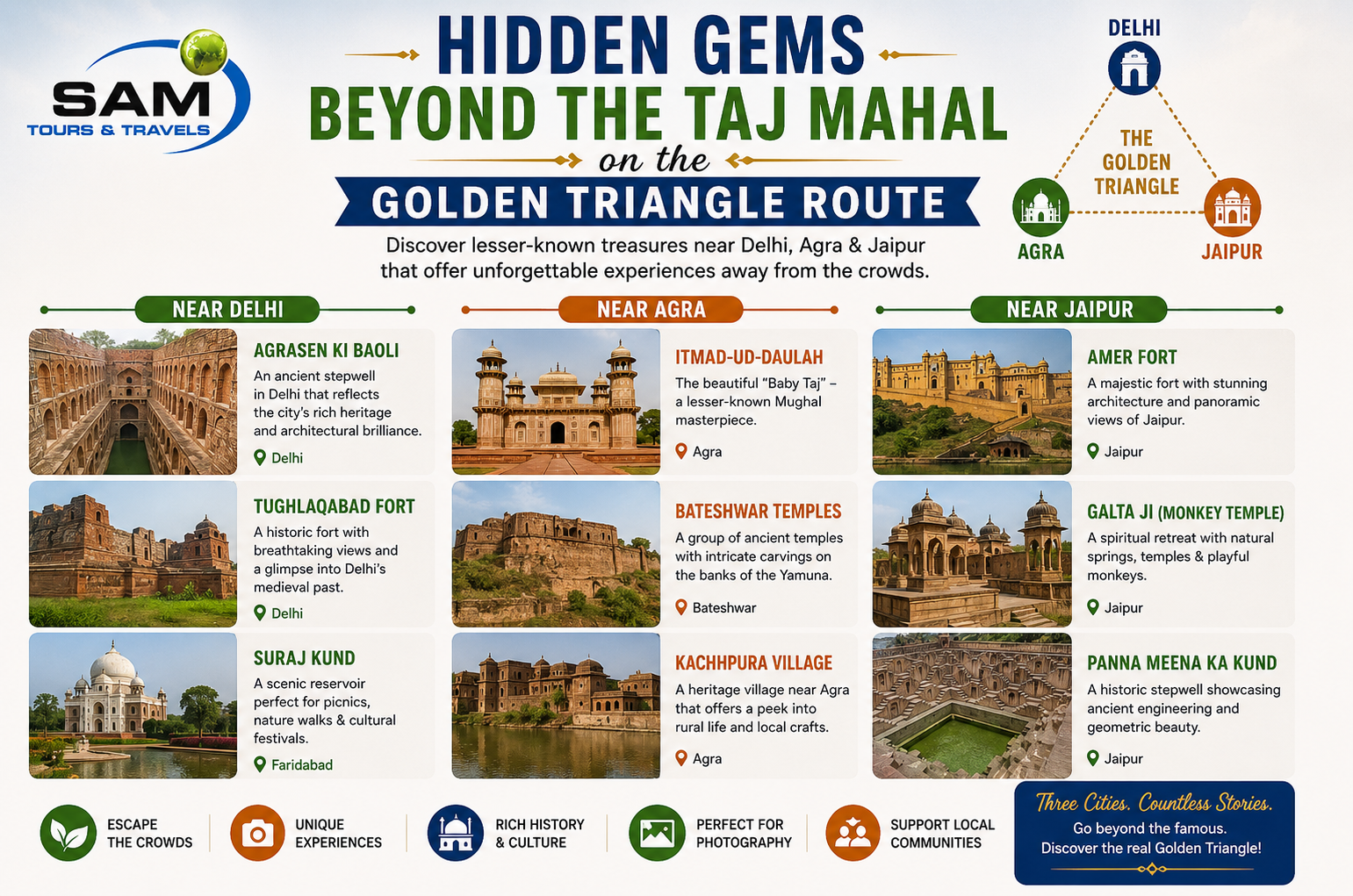
  • Hidden Gems Beyond the Taj Mahal on the Golden Triangle Route

    Hidden Gems Beyond the Taj Mahal on the Golden Triangle Route

    Introduction

    When people think about the Golden Triangle Tour, the Taj Mahal is usually the first attraction that comes to mind. While this world-famous monument deserves its reputation, the Golden Triangle offers much more than just one iconic landmark.

    From hidden stepwells and peaceful gardens to ancient observatories and local markets, Delhi, Agra, and Jaipur are filled with lesser-known treasures waiting to be discovered. These hidden gems provide unique experiences and help travelers see a different side of India’s most popular tourist circuit.

    If you want to go beyond the usual tourist trail, here are some remarkable places worth adding to your Golden Triangle itinerary.


    Why Explore Beyond the Taj Mahal?

    The Taj Mahal is undoubtedly spectacular. However, many travelers miss other incredible attractions nearby.

    Exploring hidden gems allows you to:

    • Avoid large crowds.
    • Discover local culture.
    • Enjoy unique photo opportunities.
    • Experience authentic India.
    • Learn more about regional history.

    As a result, your journey becomes more memorable and rewarding.


    Hidden Gems in Delhi

    Agrasen Ki Baoli

    Located in the heart of Delhi, Agrasen Ki Baoli is an ancient stepwell surrounded by modern buildings.

    Why Visit?

    • Unique architecture
    • Great photography spot
    • Less crowded than major monuments

    The peaceful atmosphere makes it a favorite among photographers and history lovers.


    Lodhi Garden

    Lodhi Garden offers a refreshing escape from Delhi’s busy streets.

    Visitors can enjoy:

    • Historic tombs
    • Walking trails
    • Beautiful gardens
    • Morning yoga sessions

    It is one of the city’s most relaxing attractions.


    Hauz Khas Village

    Hauz Khas combines history with modern culture.

    Here you will find:

    • Medieval ruins
    • A scenic lake
    • Art galleries
    • Cafes and boutiques

    It is the perfect place to experience contemporary Delhi.


    Hidden Gems in Agra

    Mehtab Bagh

    Many tourists visit the Taj Mahal but skip Mehtab Bagh.

    This riverside garden offers stunning views of the monument, especially during sunset.

    Highlights

    • Peaceful environment
    • Excellent photography
    • Fewer crowds

    Many photographers consider it one of the best viewpoints in Agra.


    Tomb of Itimad-ud-Daulah

    Often called the “Baby Taj,” this beautiful mausoleum predates the Taj Mahal.

    Why It Matters

    • Delicate marble craftsmanship
    • Beautiful gardens
    • Rich Mughal history

    Many architectural features later appeared in the Taj Mahal.


    Kinari Bazaar

    For travelers who enjoy shopping, Kinari Bazaar provides a more authentic experience than many tourist markets.

    Popular items include:

    • Handicrafts
    • Textiles
    • Jewelry
    • Traditional souvenirs

    Hidden Gems in Jaipur

    Panna Meena Ka Kund

    This historic stepwell is located near Amber Fort.

    Its symmetrical staircases create one of Jaipur’s most photogenic locations.

    Why Visit?

    • Unique architecture
    • Fewer tourists
    • Excellent photography opportunities

    Gaitore Ki Chhatriyan

    This peaceful site contains royal cenotaphs dedicated to Jaipur’s former rulers.

    Highlights

    • Intricate carvings
    • Quiet surroundings
    • Historic significance

    It remains one of Jaipur’s most underrated attractions.


    Patrika Gate

    Patrika Gate has quickly become one of Jaipur’s favorite photography spots.

    Visitors love:

    • Colorful artwork
    • Traditional Rajasthani designs
    • Instagram-worthy backgrounds

    Abhaneri Stepwell (Day Trip)

    Located between Agra and Jaipur, Abhaneri is home to Chand Baori, one of India’s deepest and most impressive stepwells.

    Reasons to Stop Here

    • Extraordinary architecture
    • Historical importance
    • Unique travel experience

    Many travelers consider it one of Rajasthan’s hidden treasures.


    Hidden Cultural Experiences

    Beyond monuments, the Golden Triangle also offers unique local experiences.

    Take a Heritage Walk

    Walking tours reveal hidden streets, local stories, and traditional neighborhoods.

    Visit Local Markets

    Explore:

    • Chandni Chowk in Delhi
    • Kinari Bazaar in Agra
    • Johari Bazaar in Jaipur

    Try Regional Food

    Sample authentic dishes that many tourists overlook.

    These experiences often become the most memorable part of a trip.


    Best Time to Explore Hidden Gems

    The ideal time is from October to March.

    During these months:

    • Weather remains pleasant.
    • Walking tours become comfortable.
    • Photography conditions improve.
    • Outdoor sightseeing is more enjoyable.

    Early mornings and late afternoons are especially recommended.


    Tips for Discovering Lesser-Known Attractions

    Start Early

    Hidden locations are often quieter in the morning.

    Hire Local Guides

    Local guides can introduce you to places many tourists never find.

    Leave Time for Exploration

    Avoid overloading your itinerary.

    Sometimes the most memorable experiences happen unexpectedly.

    Respect Local Communities

    Many hidden gems are still active cultural and residential areas.

    Always travel responsibly.


    Final Thoughts

    The Golden Triangle is much more than the Taj Mahal. While the famous monument deserves a place on every itinerary, some of the region’s most rewarding experiences can be found away from the crowds.

    From ancient stepwells and royal cenotaphs to peaceful gardens and vibrant local markets, these hidden gems offer a deeper understanding of India’s history and culture.

    If you’re planning a Golden Triangle Tour, consider adding a few of these lesser-known attractions to your journey. You may discover that your favorite memory comes from a place you had never heard of before.

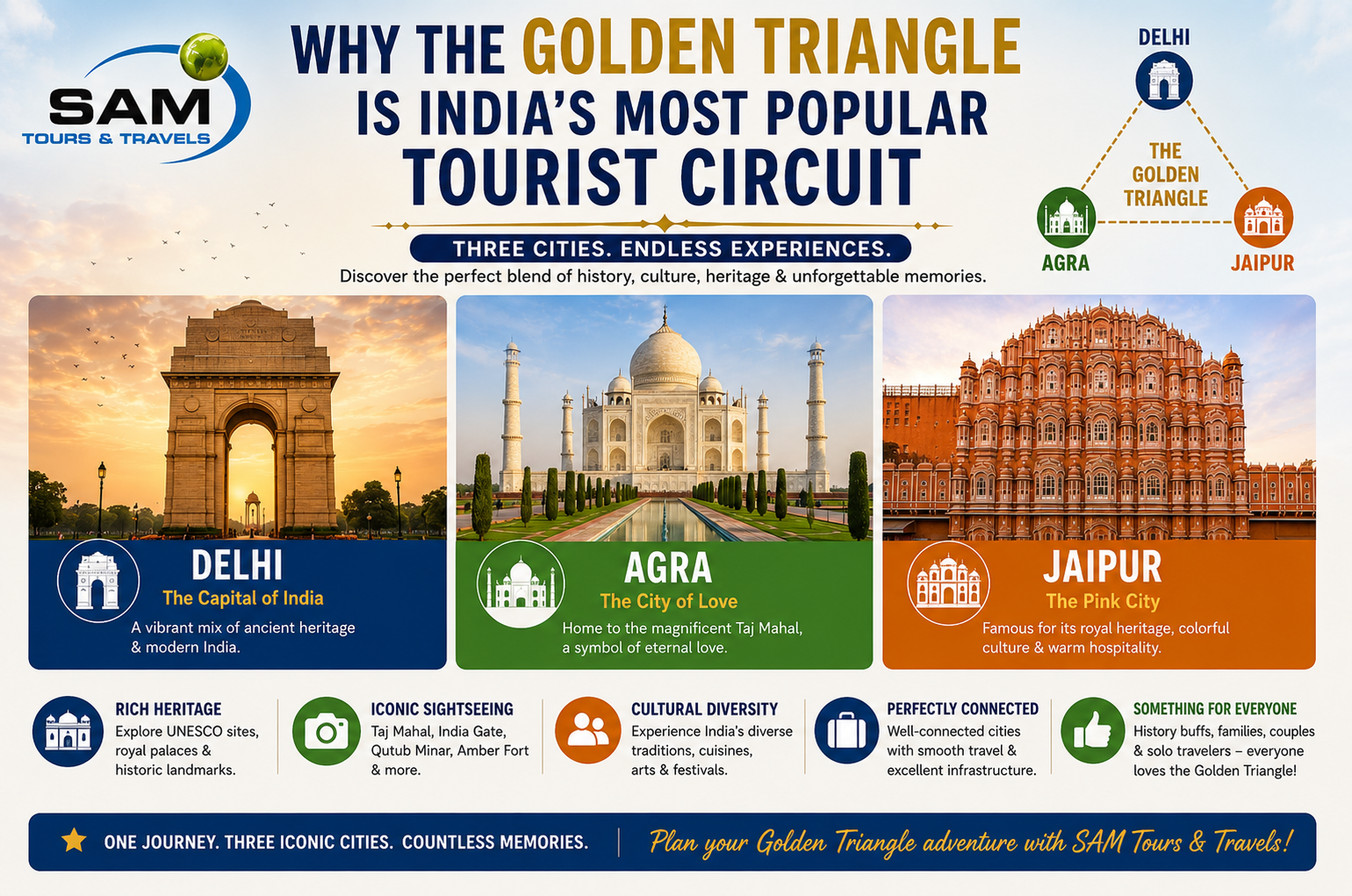
  • Why the Golden Triangle Is India’s Most Popular Tourist Circuit

    Why the Golden Triangle Is India’s Most Popular Tourist Circuit

    Introduction

    India offers countless travel experiences. However, one route continues to attract more visitors than any other. The Golden Triangle Tour remains India’s most popular tourist circuit.

    This famous journey connects Delhi, Agra, and Jaipur. Together, these cities showcase India’s history, culture, architecture, and traditions. As a result, the Golden Triangle is often the first choice for international travelers.

    In this guide, you’ll discover why millions of tourists choose this route every year.

    What Is the Golden Triangle?

    The Golden Triangle links three famous cities in North India:

    • Delhi
    • Agra
    • Jaipur

    These cities form a triangle on the map. Therefore, the route became known as the Golden Triangle.

    Most tours take between 5 and 7 days. During this time, travelers can visit some of India’s most famous landmarks.

    It Offers India’s Most Famous Attractions

    One reason for the route’s popularity is its world-famous attractions.

    Delhi Highlights

    • India Gate
    • Qutub Minar
    • Red Fort
    • Humayun’s Tomb

    Agra Highlights

    • Taj Mahal
    • Agra Fort
    • Mehtab Bagh

    Jaipur Highlights

    • Amber Fort
    • Hawa Mahal
    • City Palace
    • Jantar Mantar

    Because these attractions are close to each other, travelers can see a lot in a short time.

    Perfect for First-Time Visitors

    Many travelers visit India for the first time through the Golden Triangle.

    Why?

    Because the route offers a complete introduction to the country.

    Visitors experience:

    • History
    • Culture
    • Food
    • Architecture
    • Local traditions

    As a result, travelers gain a deeper understanding of India without visiting multiple states.

    The Taj Mahal Is a Major Attraction

    The Taj Mahal is one of the biggest reasons people choose the Golden Triangle.

    Every year, millions of tourists visit this beautiful monument.

    In fact, it is:

    • A UNESCO World Heritage Site
    • One of the Seven Wonders of the World
    • A symbol of love

    For many visitors, seeing the Taj Mahal is the highlight of their trip.

    Easy Travel Between Cities

    Another advantage is convenience.

    The roads connecting Delhi, Agra, and Jaipur are excellent. In addition, travelers can choose from several transport options.

    These include:

    • Private cars
    • Luxury coaches
    • Express trains
    • Domestic flights

    Therefore, moving between cities is easy and comfortable.

    Rich Cultural Experiences

    The Golden Triangle is more than just monuments.

    Visitors can also enjoy:

    • Traditional dance shows
    • Heritage walks
    • Local markets
    • Cooking experiences
    • Cultural festivals

    These activities help travelers connect with local life.

    Great Food Throughout the Journey

    Food lovers will find plenty to enjoy.

    Delhi

    Try street food, parathas, and butter chicken.

    Agra

    Taste famous Agra Petha and Mughlai dishes.

    Jaipur

    Enjoy Dal Baati Churma, Ghewar, and traditional Rajasthani cuisine.

    Consequently, every city adds a unique flavor to the journey.

    Suitable for Every Budget

    Another reason for the Golden Triangle’s popularity is flexibility.

    Travelers can choose:

    Budget Tours

    Affordable hotels and economical transportation.

    Mid-Range Tours

    Comfortable hotels with private transfers.

    Luxury Tours

    Heritage palaces, luxury resorts, and personalized services.

    Therefore, the route suits every type of traveler.

    Best Time to Visit

    The ideal time to visit is from October to March.

    During these months:

    • Temperatures remain pleasant.
    • Sightseeing becomes more comfortable.
    • Festivals add extra excitement.
    • Photography conditions improve.

    For this reason, winter is the busiest travel season.

    Final Thoughts

    The Golden Triangle continues to be India’s most popular tourist circuit for good reason.

    It combines history, culture, food, architecture, and unforgettable experiences in one easy journey. Moreover, the route is suitable for families, couples, solo travelers, and first-time visitors.

    If you want to experience the best of India in a single trip, the Golden Triangle is the perfect choice.

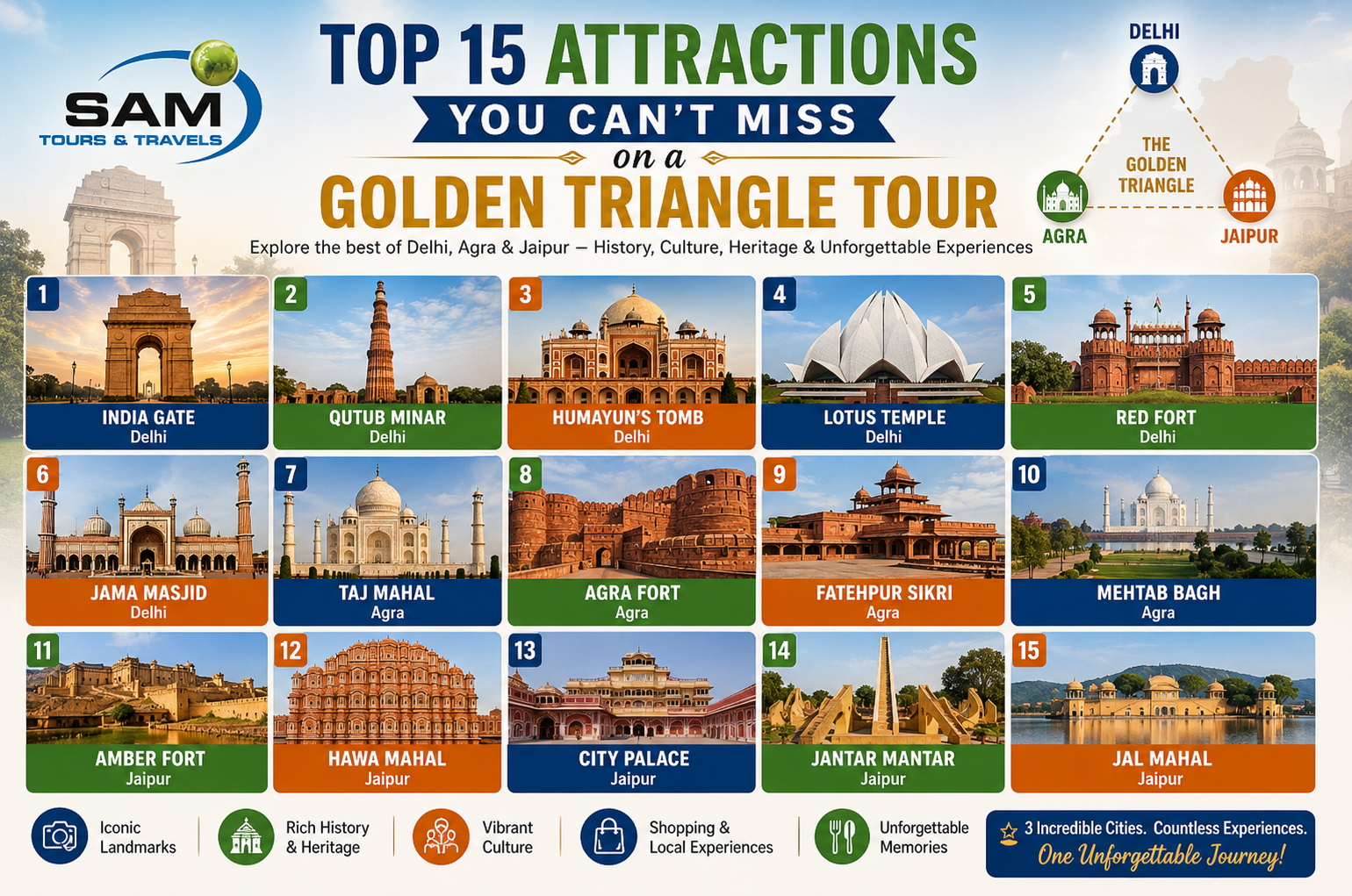
  • Top 15 Attractions You Can’t Miss on a Golden Triangle Tour

    Top 15 Attractions You Can’t Miss on a Golden Triangle Tour

    Introduction

    The Golden Triangle Tour is India’s most popular travel circuit, connecting the historic cities of Delhi, Agra, and Jaipur. This iconic route offers a perfect blend of ancient monuments, royal palaces, vibrant markets, and cultural experiences.

    If you’re planning your first visit, knowing which attractions deserve a place on your itinerary can make all the difference. In this guide, we’ll explore the top 15 attractions you can’t miss on a Golden Triangle Tour, helping you experience the very best of North India.


    1. Taj Mahal, Agra

    No Golden Triangle Tour is complete without visiting the Taj Mahal. Built by Emperor Shah Jahan as a symbol of love, this white marble masterpiece attracts millions of visitors every year.

    Why Visit?

    • One of the Seven Wonders of the World
    • UNESCO World Heritage Site
    • Stunning sunrise and sunset views

    2. Agra Fort, Agra

    Located just a few kilometers from the Taj Mahal, Agra Fort is an impressive Mughal fortress filled with palaces, gardens, and courtyards.

    Highlights

    • Jahangir Palace
    • Diwan-i-Khas
    • Musamman Burj

    3. Fatehpur Sikri

    Situated between Agra and Jaipur, Fatehpur Sikri was once the capital of the Mughal Empire.

    Must-See Attractions

    • Buland Darwaza
    • Jama Masjid
    • Panch Mahal

    4. Amber Fort, Jaipur

    Amber Fort is one of Rajasthan’s most spectacular forts. Perched on a hilltop, it offers breathtaking views and magnificent architecture.

    Why Travelers Love It

    • Sheesh Mahal (Mirror Palace)
    • Beautiful courtyards
    • Historic Rajput architecture

    5. Hawa Mahal, Jaipur

    Known as the Palace of Winds, Hawa Mahal is Jaipur’s most recognizable landmark.

    Famous For

    • Unique honeycomb façade
    • Stunning photography opportunities
    • Rich royal history

    6. City Palace, Jaipur

    The City Palace remains one of Jaipur’s most beautiful attractions. It combines Mughal and Rajput architectural styles.

    Highlights

    • Royal museums
    • Historic courtyards
    • Elegant palace interiors

    7. Jantar Mantar, Jaipur

    This UNESCO World Heritage Site features fascinating astronomical instruments built in the 18th century.

    Why Visit?

    • Ancient scientific innovation
    • Unique architectural design
    • Educational experience

    8. Qutub Minar, Delhi

    Standing at 73 meters tall, Qutub Minar is the tallest brick minaret in the world.

    Visitor Highlights

    • Intricate carvings
    • Historic ruins
    • UNESCO World Heritage status

    9. Humayun’s Tomb, Delhi

    This magnificent Mughal tomb inspired the design of the Taj Mahal.

    Reasons to Visit

    • Beautiful Persian gardens
    • Impressive architecture
    • Excellent photography location

    10. India Gate, Delhi

    India Gate is one of the most famous landmarks in the capital city.

    Best Experience

    • Evening visits
    • Family-friendly atmosphere
    • Illuminated monument views

    11. Red Fort, Delhi

    The Red Fort served as the main residence of Mughal emperors for nearly 200 years.

    What Makes It Special?

    • Massive red sandstone walls
    • Rich historical significance
    • UNESCO World Heritage Site

    12. Jama Masjid, Delhi

    One of India’s largest mosques, Jama Masjid is an architectural masterpiece in Old Delhi.

    Highlights

    • Grand courtyard
    • Stunning city views
    • Historical importance

    13. Chandni Chowk, Delhi

    Chandni Chowk offers a completely different side of the Golden Triangle experience.

    Don’t Miss

    • Street food
    • Local markets
    • Rickshaw rides through narrow lanes

    14. Jal Mahal, Jaipur

    Located in the middle of Man Sagar Lake, Jal Mahal is one of Jaipur’s most photographed landmarks.

    Why It’s Popular

    • Scenic lake views
    • Peaceful surroundings
    • Excellent photo opportunities

    15. Mehtab Bagh, Agra

    Mehtab Bagh provides one of the best views of the Taj Mahal from across the Yamuna River.

    Best Time to Visit

    • Sunset hours
    • Photography sessions
    • Quiet sightseeing experience

    How Many Days Are Needed to Visit These Attractions?

    Most travelers can comfortably explore these attractions during a 5 to 7-day Golden Triangle Tour. However, adding an extra day allows for a more relaxed experience and deeper cultural exploration.


    Travel Tips for Visiting Golden Triangle Attractions

    Start Early

    Popular sites such as the Taj Mahal and Amber Fort become crowded later in the day.

    Book Tickets Online

    Online bookings save time and help avoid long queues.

    Carry Comfortable Footwear

    You’ll spend many hours walking through forts, palaces, and historical complexes.

    Stay Hydrated

    Carry water, especially during warmer months.

    Hire a Local Guide

    Professional guides can help you understand the history behind each monument.


    Conclusion

    The Golden Triangle Tour showcases some of India’s most remarkable attractions. From the timeless beauty of the Taj Mahal and the grandeur of Agra Fort to the royal elegance of Jaipur and the historic charm of Delhi, every stop offers unforgettable experiences.

    If you’re planning a Golden Triangle journey, make sure these 15 attractions are on your itinerary. Together, they tell the story of India’s rich heritage, architectural brilliance, and vibrant culture.

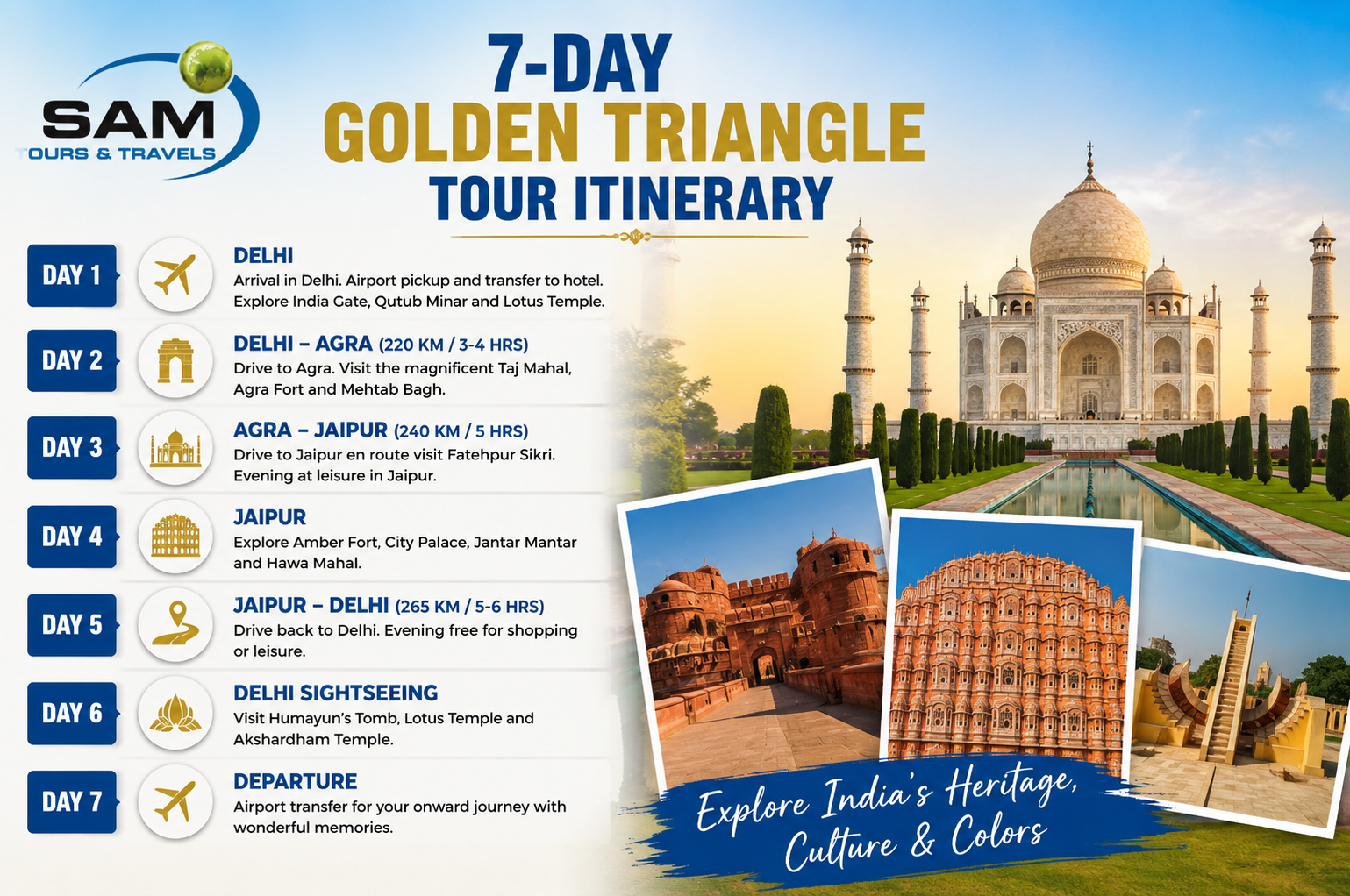
  • 7-Day Golden Triangle Tour Itinerary: Delhi, Agra & Jaipur Explained

    7-Day Golden Triangle Tour Itinerary: Delhi, Agra & Jaipur Explained

    Introduction

    A 7-Day Golden Triangle Tour Itinerary is one of the best ways to explore India’s rich heritage, vibrant culture, and architectural wonders. Covering Delhi, Agra, and Jaipur, this famous travel circuit introduces visitors to historic monuments, bustling markets, royal palaces, and unforgettable local experiences.

    For first-time travelers, seven days provides the perfect amount of time to discover the highlights of each city without feeling rushed. This guide explains a day-by-day itinerary to help you plan a memorable Golden Triangle journey.

    Why Choose a 7-Day Golden Triangle Tour?

    The Golden Triangle connects three of India’s most iconic destinations:

    • Delhi – A blend of history and modern life
    • Agra – Home to the magnificent Taj Mahal
    • Jaipur – Rajasthan’s royal Pink City

    With seven days available, travelers can enjoy sightseeing at a comfortable pace while experiencing local culture, cuisine, and traditions.

    Day 1: Arrival and Exploring New Delhi

    Your Golden Triangle adventure begins in Delhi, India’s capital city.

    Places to Visit

    • India Gate
    • Rashtrapati Bhavan (Drive Past)
    • Humayun’s Tomb
    • Lotus Temple
    • Qutub Minar

    Evening Activity

    Explore Connaught Place and enjoy dinner at a local restaurant.

    Overnight Stay

    Delhi


    Day 2: Discover Old Delhi

    The second day focuses on Delhi’s historic heart.

    Top Attractions

    • Red Fort (Outside View)
    • Jama Masjid
    • Chandni Chowk
    • Raj Ghat

    Local Experience

    Take a rickshaw ride through Chandni Chowk and sample authentic street food.

    Overnight Stay

    Delhi


    Day 3: Delhi to Agra

    After breakfast, drive to Agra via the Yamuna Expressway.

    Attractions in Agra

    • Taj Mahal
    • Agra Fort
    • Mehtab Bagh

    Travel Tip

    Visit the Taj Mahal during sunset for beautiful photographs.

    Overnight Stay

    Agra


    Day 4: Agra to Jaipur via Fatehpur Sikri

    Begin your journey toward Jaipur with a stop at one of India’s most fascinating historic sites.

    En Route Attractions

    • Fatehpur Sikri
    • Buland Darwaza
    • Jama Masjid

    After sightseeing, continue driving to Jaipur.

    Evening Activity

    Explore local markets near your hotel.

    Overnight Stay

    Jaipur


    Day 5: Explore Jaipur’s Royal Heritage

    Jaipur is known for its grand forts and royal architecture.

    Must-Visit Attractions

    • Amber Fort
    • Jal Mahal
    • City Palace
    • Jantar Mantar
    • Hawa Mahal

    Shopping Experience

    Visit Johari Bazaar and Bapu Bazaar for souvenirs and handicrafts.

    Overnight Stay

    Jaipur


    Day 6: Cultural Experiences in Jaipur

    Spend another day enjoying Jaipur’s rich culture and traditions.

    Recommended Activities

    • Traditional Rajasthani lunch
    • Heritage walk in the old city
    • Visit Albert Hall Museum
    • Explore local artisan workshops

    Evening Program

    Enjoy a cultural dance and folk music performance.

    Overnight Stay

    Jaipur


    Day 7: Jaipur to Delhi Departure

    After breakfast, drive back to Delhi.

    Depending on your flight schedule, you may have time for:

    • Last-minute shopping
    • Local sightseeing
    • Airport transfer

    Your unforgettable Golden Triangle journey concludes here.


    Best Time for a 7-Day Golden Triangle Tour

    October to March

    This is the most comfortable season for sightseeing.

    July to September

    Monsoon season offers lush landscapes and fewer crowds.

    April to June

    Summer brings higher temperatures but lower hotel rates.


    Estimated Cost of a 7-Day Golden Triangle Tour

    Budget Package

    ₹18,000 – ₹35,000 per person

    Mid-Range Package

    ₹40,000 – ₹75,000 per person

    Luxury Package

    ₹90,000+ per person

    Prices vary based on accommodation, transportation, and inclusions.


    Travel Tips for First-Time Visitors

    • Book hotels in advance.
    • Carry comfortable walking shoes.
    • Stay hydrated throughout the trip.
    • Keep a power bank for mobile devices.
    • Start sightseeing early to avoid crowds.
    • Respect local customs and traditions.

    These simple tips can help make your journey more enjoyable.


    Conclusion

    A 7-Day Golden Triangle Tour Itinerary offers the perfect introduction to India. From Delhi’s historic landmarks and Agra’s world-famous Taj Mahal to Jaipur’s royal palaces and colorful markets, every day brings a new experience.

    Whether you’re traveling with family, friends, or as a couple, this itinerary allows you to explore the best of North India in just one week while creating memories that will last a lifetime.