Introduction
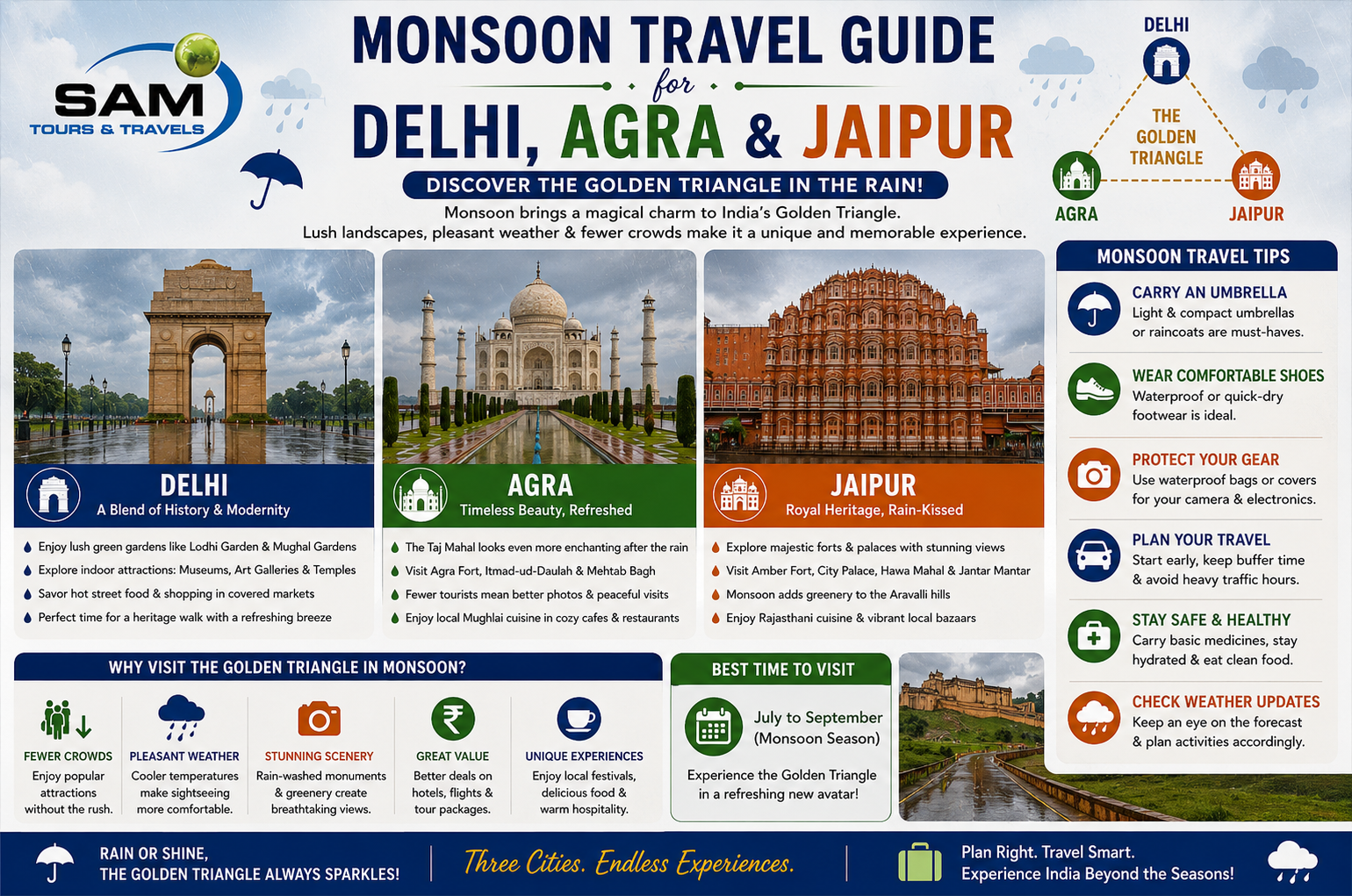
Most travelers associate the Golden Triangle with winter vacations. However, the monsoon season offers a completely different experience. Between July and September, Delhi, Agra, and Jaipur become greener, cooler, and less crowded.
Rain showers bring new life to historic monuments, gardens, and city landscapes. In addition, hotels and tour operators often offer attractive discounts during this period.
If you’re considering a monsoon getaway, this guide will help you plan the perfect trip through Delhi, Agra, and Jaipur.
Why Travel During the Monsoon?
Many travelers avoid the rainy season. However, those who visit during this time often discover a quieter and more authentic side of India.
Benefits of Monsoon Travel
- Fewer tourists at major attractions
- Lower hotel rates
- Lush green landscapes
- Pleasant temperatures after rain
- Better photography opportunities
As a result, monsoon travel can offer excellent value for money.
Weather Overview
Delhi
- Temperature: 25°C to 35°C
- Frequent evening showers
- Refreshing mornings after rainfall
Agra
- Temperature: 24°C to 34°C
- Occasional rain showers
- Greener gardens around monuments
Jaipur
- Temperature: 23°C to 32°C
- Beautiful cloudy skies
- Scenic views around forts and hills
The weather remains much cooler compared to the summer months.
Why Monsoon Is Great for Photography
The rainy season creates dramatic landscapes and unique photo opportunities.
Best Photography Advantages
- Cloud-covered skies
- Reflections on historic buildings
- Vibrant greenery
- Soft natural lighting
Many photographers consider monsoon one of the best seasons for capturing the beauty of the Golden Triangle.
Delhi During the Monsoon
Delhi looks surprisingly beautiful after rainfall.
Best Places to Visit
Humayun’s Tomb
The surrounding gardens become greener and more vibrant.
Lodhi Garden
Perfect for morning walks after a refreshing rain shower.
India Gate
The monument looks especially attractive during cloudy evenings.
Hauz Khas Village
Enjoy lakeside views, cafes, and historic ruins.
Monsoon adds a fresh charm to many of Delhi’s outdoor attractions.
Agra During the Monsoon
Agra becomes cooler and more comfortable during the rainy season.
Must-Visit Attractions
Taj Mahal
The white marble monument looks stunning against dark monsoon clouds.
Mehtab Bagh
Offers beautiful views of the Taj Mahal and the Yamuna River.
Agra Fort
Pleasant weather makes exploring the fort much easier.
Tomb of Itimad-ud-Daulah
Often called the Baby Taj, this site is less crowded during monsoon.
Jaipur During the Monsoon
Many travelers consider Jaipur the most beautiful Golden Triangle destination during the rainy season.
Top Attractions
Amber Fort
The surrounding Aravalli Hills turn lush green after rainfall.
Nahargarh Fort
Offers breathtaking city views under cloudy skies.
Jal Mahal
The palace appears even more magical during the monsoon season.
City Palace
A great indoor and outdoor attraction for rainy days.
Best Monsoon Experiences
Enjoy Rooftop Cafes
Many cafes in Jaipur and Delhi offer incredible views during rainy evenings.
Explore Local Markets
Visit:
- Chandni Chowk
- Johari Bazaar
- Bapu Bazaar
- Sadar Bazaar
Crowds are often smaller during the monsoon months.
Taste Seasonal Delicacies
Enjoy:
- Hot chai
- Pakoras
- Kachori
- Traditional Indian sweets
Rainy weather makes these local treats even more enjoyable.
Travel Tips for the Monsoon Season
Carry Rain Protection
Pack:
- Umbrella
- Lightweight raincoat
- Waterproof bag cover
Wear Comfortable Footwear
Choose shoes with good grip and quick-drying material.
Keep Electronics Protected
Use waterproof pouches for phones and cameras.
Check Weather Forecasts
Monitor local forecasts before planning outdoor activities.
Allow Extra Travel Time
Heavy rain may occasionally slow road traffic.
Monsoon Travel Costs
One of the biggest advantages of monsoon travel is affordability.
Typical Savings
- Lower hotel rates
- Discounted tour packages
- Better flight deals
- Reduced transportation costs
This makes monsoon an excellent choice for budget-conscious travelers.
Who Should Travel During Monsoon?
Monsoon travel is ideal for:
- Photography enthusiasts
- Budget travelers
- Couples
- Nature lovers
- Repeat visitors to India
If you prefer fewer crowds and unique scenery, the monsoon season is worth considering.
Best Months for a Monsoon Trip
July
Beginning of the rainy season with cooler temperatures.
August
The greenest month of the year across the Golden Triangle.
September
One of the best months to travel, with less rainfall and pleasant weather.
September is often considered the perfect balance between greenery and comfortable sightseeing.
Final Thoughts
A monsoon journey through Delhi, Agra, and Jaipur offers a unique perspective on India’s most famous travel circuit. While the Taj Mahal, Amber Fort, and India Gate remain popular attractions, the rainy season transforms them into even more beautiful destinations.
With fewer crowds, lower prices, and stunning landscapes, monsoon travel can be one of the most rewarding times to explore the Golden Triangle. If you’re looking for a different kind of adventure, don’t overlook the magic of India’s rainy season.